Today, October 1, 2025

Today's
EarthStation1.com 15% Off Commemorative Memorial Title: The World:
A Television History Documentary Series DVD, Download, USB
Today, October 1, 2025
October 1 - October 31: National Arts &
Humanities Month: -- National Arts & Humanities Month was
established in 1993 and is celebrated every October in the United
States. It was initiated to encourage Americans to explore new
facets of the arts and humanities in their lives, and to begin a
lifelong habit of participation in the arts and humanities. It has
become the nation's largest collective annual celebration of the
arts and humanities. National Arts and Humanities Month's four
goals are: 1) FOCUSING: To create a national, state and local
focus on the arts and humanities through the media, 2)
ENCOURAGING: To encourage the participation of individuals, as
well as arts, humanities and other organizations nationwide, 3)
ALLOWING: To provide an opportunity for federal, state and local
business, government and civic leaders to declare their support
for the arts and humanities, and 4) RAISING: To establish a highly
visible vehicle for raising public awareness about the arts and
humanities. On Sale @ 15% Off Discount Till Midnight PT!
https://store.earthstation1.com/the-world-a-television-history-4-dual-layer-dvds-all-26-sh426.html
Today's
EarthStation1.com 15% Off Commemorative Memorial Title: Hate On
Trial: SPLC Vs WAR Trial + Skinhead USA MP4 Download DVD Set
Today, October 1, 2025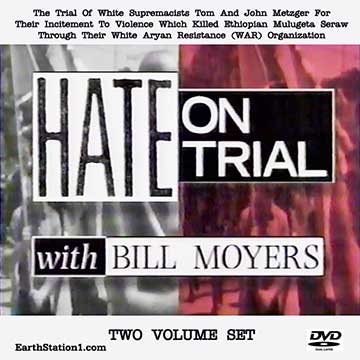
October 1 - October 31: Hate Crimes
Awareness Month: -- The FBI's 2024 crime report identified 11,862
hate crime incidents in 2023, the most since the bureau started
collecting the data in 1991. While the FBI's annual reports show
only a small increase in hate-fueled crimes, they mark a
continuing rise. To highlight this alarming trend, the Southern
Poverty Law Center has designated the entire month of October as
Hate Crimes Awareness Month and will conduct an annual campaign to
alert the public, advocates, policymakers and politicians to the
problem. We'll also press for specific actions to prevent hate
crimes and provide resources to empower effective community
response. On Sale @ 15% Off Discount Till Midnight PT!
https://store.earthstation1.com/hate-on-trial-splc-vs-war-racism-on-trial-mp4-video-download-dvd-se4.html
Today's
EarthStation1.com 15% Off Commemorative Memorial Title: Before
Stonewall The Making Of A Gay And Lesbian Community DVD MP4 USB
Today, October 1, 2025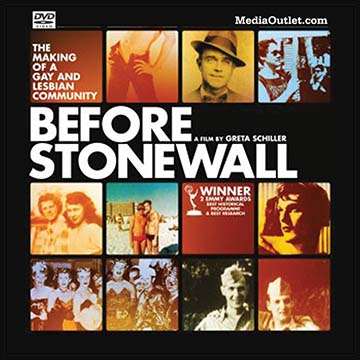
October 1: LGBTQ+ History Month: -- An
annual month-long observance of lesbian, gay, bisexual and
transgender history, and the history of the gay rights and related
civil rights movements. It was founded in 1994 by Missouri
high-school history teacher Rodney Wilson. LGBTQ+ History Month
provides role models, builds community, and represents a civil
rights statement about the contributions of the LGBTQ+ community.
As of 2022, LGBTQ+ History Month is a month-long celebration that
is specific to Australia, Canada, Cuba, Finland, Germany, Hungary,
Italy, United Kingdom and the US. In the United States, Canada,
and Australia, it is celebrated in October to coincide with
National Coming Out Day on 11 October and to commemorate the first
and second marches on Washington in 1979 and 1987 for LGBT rights.
In Hungary and the United Kingdom, including Scotland, Northern
Ireland, and Wales, it is observed during February; in the UK this
coincides with a major celebration of the 2003 abolition of
Section 28. In Berlin, the capital of Germany, it is known as
Queer History Month and is celebrated in May. ========= October 1,
1989: Denmark introduces the world's first legal modern same-sex
civil union called "registered partnership", becoming
the first country in the world to enact legislation that provided
same-sex couples with almost all of the rights and benefits of
marriage. By June 15, 2012, same-sex marriage became legal in
Denmark. A bill for the legalization of same-sex marriages was
introduced by the Thorning-Schmidt I Cabinet, and approved by the
Folketing on June 7, 2012. It received royal assent by Queen
Margrethe II on June 12 and took effect three days later. Denmark
was the eleventh country in the world to legalize same-sex
marriage. Same-sex marriage is also legal in the two other
constituent countries of the Danish Realm: Greenland (effective
April 1, 2016) and The Faroe Islands (effective July 1, 2017. On
Sale @ 15% Off Discount Till Midnight PT!
https://store.earthstation1.com/before-stonewall-the-making-of-a-gay-and-lesbian-community-dvd.html
Today's
EarthStation1.com 15% Off Commemorative Memorial Title:
Discovering Music: World Music Documentary Series DVD, MP4, USB
Drive
Today, October 1, 2025
October 1: International Music Day: -- An
annual holiday created in 1974 by The International Music Council.
Celebrate this day even if you don't play music by actively
appreciating and enjoying the power of music in bringing people
together! Since its inception in 1949, the International Music
Council, an associate organization of UNESCO, strongly felt that
music had the power to unite communities and foster world peace.
The Council, especially its President in 1975, Lord Yehudi
Menuhin, firmly believed that music can strengthen relationships
and bridge cultural gaps among communities. Realizing this, the
Council decided to devote one day in a year to music. The aim was
to harness the power of music to unite communities and cultures
and inspire them to coexist harmoniously. Lord Yehudi Menuhin,
arguably America's most prolific violinist and music conductor at
that time, as the President of the International Music Council,
wrote a letter to the IMC members proclaiming October 1 as the
International Music Day. In the letter, he clearly spelled out the
reasons for marking the day. The International Music Day was
intended to encourage promoting musical art among all the sections
of society; motivate the application of UNESCO's ideals of peace
and friendship among people; create space for the evolution of
cultures through the exchange of experiences; and encourage mutual
appreciation of cultures, especially their aesthetic values. Since
the first International Music Day on October 1, 1975, over 150
countries across the globe have celebrated the power of music to
unite societies, communities, and people. The day offers people an
occasion to celebrate music and contribute towards a more
peaceful, joyful, and harmonious society. Events on this day
include concerts, exhibitions, seminars on creating music,
lectures, music conferences, and so forth. On Sale @ 15% Off
Discount Till Midnight PT!
https://store.earthstation1.com/the-discovering-music-tv-series-2-dual-layer-dvd-se2.html
Today's
EarthStation1.com 15% Off Commemorative Memorial Title: Audio
Recording History Films Collection DVD, Download, USB Drive
Today, October 1, 2025
October 1: CD Player Day: -- October 1,
1982: Product Launches: -- Sony and Phillips launch the compact
disc in Japan. On the same day, Sony released the model CDP-101
compact disc player, the world's first commercially released
consumer compact disc playerm at a list price of 168,000 yen
(approx 730 USD). The Japan-only launch was partially because
Philips, Sony's partner in the development of the CD format, was
unable to meet the original agreed launch date. Rather than agree
to a full postponement, Sony agreed to delay the launch of the
format outside Japan by six months. The Philips CD100 launched in
November 1982, although early Philips players contained some Sony
components. In line with the agreement, the system was launched
worldwide in March 1983. ========= A CD player is an electronic
device that plays audio compact discs, which are a digital optical
disc data storage format. CD players were first sold to consumers
in 1982. CDs typically contain recordings of audio material such
as music or audiobooks. CD players may be part of home stereo
systems, car audio systems, personal computers, or portable CD
players such as CD boomboxes. Most CD players produce an output
signal via a headphone jack or RCA jacks. To use a CD player in a
home stereo system, the user connects an RCA cable from the RCA
jacks to a hi-fi (or other amplifier) and loudspeakers for
listening to music. To listen to music using a CD player with a
headphone output jack, the user plugs headphones or earphones into
the headphone jack. Modern units can play audio formats other than
the original CD PCM audio coding, such as MP3, AAC and WMA. DJs
playing dance music at clubs often use specialized players with an
adjustable playback speed to alter the pitch and tempo of the
music. Audio engineers using CD players to play music for an event
through a sound reinforcement system use professional audio-grade
CD players. CD playback functionality is also available on
CD-ROM/DVD-ROM drive equipped computers as well as on DVD players
and most optical disc-based game consoles. ========= The Compact
disc (CD) is a digital optical disc data storage format that was
co-developed by Philips and Sony and released in 1982. The format
was originally developed to store and play only digital audio
recordings (CD-DA) but was later adapted for storage of data
(CD-ROM). Several other formats were further derived from these,
including write-once audio and data storage (CD-R), rewritable
media (CD-RW), Video CD (VCD), Super Video CD (SVCD), Photo CD,
PictureCD, Compact Disc-Interactive (CD-i), and Enhanced Music CD.
Standard CDs have a diameter of 120 millimetres (4.7 in) and are
designed to hold up to 74 minutes of uncompressed stereo digital
audio or about 650 MiB of data. Capacity is routinely extended to
80 minutes and 700 MiB by arranging more data closely on the same
sized disc. The Mini CD has various diameters ranging from 60 to
80 millimetres (2.4 to 3.1 in); they are sometimes used for CD
singles, storing up to 24 minutes of audio, or delivering device
drivers. At the time of the technology's introduction in 1982, a
CD could store much more data than a personal computer hard drive,
which would typically hold 10 MB. By 2010, hard drives commonly
offered as much storage space as a thousand CDs, while their
prices had plummeted to commodity level. In 2004, worldwide sales
of audio CDs, CD-ROMs, and CD-Rs reached about 30 billion discs.
By 2007, 200 billion CDs had been sold worldwide. From the early
2000s, CDs were increasingly being replaced by other forms of
digital storage and distribution, with the result that by 2010 the
number of audio CDs being sold in the U.S. had dropped about 50%
from their peak; however, they remained one of the primary
distribution methods for the music industry. In 2014, revenues
from digital music services, such as iTunes, Spotify and YouTube,
matched those from physical format sales for the first time.
According to the RIAA's midyear report in 2020, vinyl record
revenues surpassed those of CDs for the first time since the
1980s. On Sale @ 15% Off Discount Till Midnight PT!
https://store.earthstation1.com/audio-recording-history-films-dual-layer-dvd.html
Today's
EarthStation1.com 15% Off Commemorative Memorial Title: Brave New
World TV Special DVD, MP4 Video Download, USB Flash Drive
Today, October 1, 2025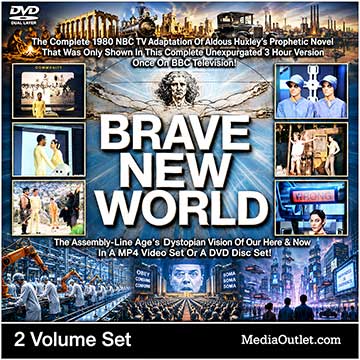
October 1: Model T Day: -- October 1,
1908: The Industrial Revolution: The Second Industrial Revolution
(1870s-1914): The Automotive Industry: The History Of The
Automobile: The History Of The Automotive Industry: Product
Launches: -- Ford puts the Model T car on the market at a price of
825 USD. The Ford Model T (colloquially known as the Tin Lizzie,
Leaping Lena, or Flivver) was an automobile produced by Ford Motor
Company from October 1, 1908, to May 26, 1927. It is generally
regarded as the first affordable automobile, the car that opened
travel to the common middle-class American; some of this was
because of Ford's efficient fabrication, including assembly line
production instead of individual hand crafting. The Ford Model T
was named the most influential car of the 20th century in the 1999
Car of the Century competition, ahead of the BMC Mini, Citroen DS,
and Volkswagen Type 1. Ford's Model T was successful not only
because it provided inexpensive transportation on a massive scale,
but also because the car signified innovation for the rising
middle class and became a powerful symbol of America's age of
modernization. With 16.5 million sold it stands eighth on the top
ten list of most sold cars of all time as of 2012. Although
automobiles had already existed for decades, they were still
mostly scarce, expensive, and unreliable at the Model T's
introduction in 1908. Positioned as reliable, easily maintained,
mass-market transportation, it was a runaway success. In a matter
of days after the release, 15,000 orders were placed. The first
production Model T was produced on August 12, 1908 and left the
factory on September 27, 1908, at the Ford Piquette Avenue Plant
in Detroit, Michigan. On May 26, 1927, Henry Ford watched the 15
millionth Model T Ford roll off the assembly line at his factory
in Highland Park, Michigan. Several cars were conceived by Henry
Ford from the founding of the company in 1903 before the Model T
was introduced. Although he started with the Model A, there were
not 20 production models (A through T); some were only prototypes.
The production model immediately before the Model T was the Model
S, an upgraded version of the company's largest success to that
point, the Model N. The follow-up was the Ford Model A (rather
than any Model U). The company publicity said this was because the
new car was such a departure from the old that Henry wanted to
start all over again with the letter A. Although credit for the
development of the assembly line belongs to Ransom E. Olds with
the first mass-produced automobile, the Oldsmobile Curved Dash,
beginning in 1901, the tremendous advancements in the efficiency
of the system over the life of the Model T can be credited almost
entirely to the vision of Ford and his engineers. In Aldous
Huxley's Brave New World, Henry Ford is regarded as a messianic
figure, Christian crosses have been truncated to Ts, and all
vehicles are called "Flivvers" (from the slang reference
to the Model T). Moreover, the calendar is converted to an A.F.
("After Ford") system, wherein the calendar begins (AF
1) with the introduction of the Model T (AD 1908). On Sale @ 15%
Off Discount Till Midnight PT!
https://store.earthstation1.com/brave-new-world-dvd-aldous-huxley-complete-3-hr-tv-specia3.html
Today's
EarthStation1.com 15% Off Commemorative Memorial Title: Yours
Truly Johnny Dollar Radio Series MP3 DVD, Download, USB Drive
Today, October 1, 2025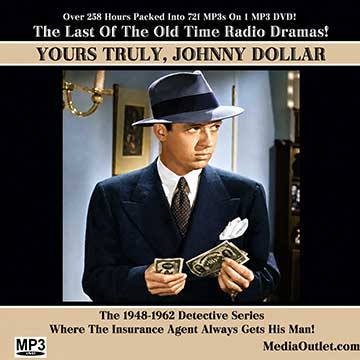
( #JCKaelin here: note that his is
celebrated on the anniversary of Jack The Ripper's Saucy Jacky
Postcard!) ========= October 1: World Postcard Day: -- A fun
opportunity to embrace a bit of the past and also celebrate the
connections that can be brought into the present through the
simple sending and receiving of postcards! While the idea for the
postcard likely evolved in a number of ways, in 1777 a French
engraver designed some sheets of Paris cards that were meant to be
cut and sent through the post, likely the first iteration of the
postcard. Then, in October, 1869 the government in Austria issued
the first official postal card. It took some time to catch on as
these postcards were criticized because they could be read by
anyone - including servants. Even so, the convenience and
efficiency of the postcard eventually overcame the need for
privacy and their popularity continued to grow throughout the
world. With the advent of the email and internet, the use of the
postal service or "snail mail" took a hit and postcards
did too. But the folks who still loved sending and receiving
postcards wanted to continue into this hobby. It was in 2005 that
Portuguese software engineer, Paulo Magalhaes, started an online
platform called Postcrossing, dedicated to finding others with
whom he could exchange postcards. Postcrossing organized a
worldwide celebration for the 150th anniversary of the postcard in
2019. The following year Postcrossing, along with Finepaper, saw
to the launching of World Postcard Day and the event continues to
be celebrated annually. On Sale @ 15% Off Discount Till Midnight
PT!
https://store.earthstation1.com/yours-truly-johnny-dollar-old-time-radio-dual-layer-mp3-dv3.html
Today's
EarthStation1.com 15% Off Commemorative Memorial Title: The Shadow
Of Jack The Ripper MP4 Video Download DVD
Today, October 1, 2025
( #JCKaelin here: Note that today is also
World Postcard Day! ) ========= October 1, 1888: Crime: Crime In
The United Kingdom: Murder: Serial Murders: The Whitechapel
Murders (The Jack The Ripper Murders, The Leather Apron Murders):
Jack The Ripper Letters: The Saucy Jacky Postcard: -- A postcard
postmarked "Oc 1 88" is received the same day by The
Central News Agency of London claiming to have been written by the
unidentified serial killer known as Jack the Ripper. The postcard
states that the two victims murdered on September 30, Elizabeth
Stride and Catherine Eddowes, were both killed in the early
morning and that the author had insufficient time to sever his
victim's ears to send to the police as promised in a previous
letter received by the Central News Agency; however, the lobe and
auricle of Eddowes' right ear were indeed found detached at the
crime scene as a result of facial mutilations that the killer had
performed, although this was not public knowledge at the time. The
text of the postcard reads:"I was not codding dear old Boss
when I gave you the tip, you'll hear about Saucy Jacky's work
tomorrow double event this time number one squealed a bit couldn't
finish straight off. Had not time to get ears off for police
thanks for keeping last letter back till I got to work again. Jack
the Ripper". Some authors have argued that the postcard was
sent before the murders were publicised, making it unlikely that
any hoaxer would have such knowledge of the crime; however the
correspondence was postmarked more than 24 hours after the
killings had occurred, and long after many details of the murders
were known by journalists and residents of the area. Because so
many hoax letters were received by Scotland Yard, the press and
others, it is unknown whether this was an authentic letter written
by the Whitechapel murderer. The postcard did contain information
deemed compelling enough to lead investigators to publish a
facsimile of the communication in hopes that someone might
recognise the handwriting. Police officials later claimed to have
identified a specific journalist as the author of this postcard
and the earlier "Dear Boss" letter. In 1931, journalist
Fred Best of The Star claimed he and a colleague at the newspaper
had written all the letters signed "Jack the Ripper" in
order to "keep the business alive". In the years after
the Ripper murders, the Saucy Jacky postcard disappeared from the
police files. Although the "Dear Boss" letter was
recovered in 1987, the "Saucy Jacky" postcard is still
missing. In 2018, a forensic linguistic analysis found strong
linguistic evidence suggesting that this postcard and the "Dear
Boss" letter were written by the same person. On Sale @ 15%
Off Discount Till Midnight PT!
https://store.earthstation1.com/timewatch-shadow-of-jack-the-ripper-dvd.html
Today's
EarthStation1.com 15% Off Commemorative Memorial Title: Alexander
The Great William Shatner Adam West + OTR Trilogy MP4 DVD
Today, October 1, 2025
October 1, 331 BC: Greece: Ancient
Greece: Ancient Greek Wars: The Wars Of Alexander The Great: The
Battle Of Gaugamela (The Battle Of Arbela): -- In one of the great
battles and turning points of history, Alexander The Great's Army
Of Macdeon wins a decisive victory over The Persian Army of King
Darius III Of Persia in The Battle Of Gaugamela (Ancient Greek:
'The Battle Of The Camel's House") in the second and final
battle between the two kings, and the final blow to the Achaemenid
Empire, resulting in its complete conquest by Alexander along with
the fall of King Darius III. The fighting took place in Gaugamela,
a village on the banks of the river Bumodus, north of Arbela
(modern-day Erbil, in Iraqi Kurdistan). Despite being heavily
outnumbered, the Army of Macedon emerged victorious due to the
employment of superior tactics and the clever usage of light
infantry forces. On Sale @ 15% Off Discount Till Midnight PT!
https://store.earthstation1.com/alexander-the-great-tv-pilot-william-shatner-adam-west-dvd.html
Today's
EarthStation1.com 15% Off Commemorative Memorial Title: Images Of
Jesus: Visual Art Representations Of Jesus DVD MP4 USB Drive
Today, October 1, 2025
October 1, 1541: #BOTD: #HBD! El Greco
(Spanish: "The Greek"), Greek-Spanish painter, sculptor
and architect of the Spanish Renaissance (d. April 7, 1614) is
#born Dominikos Theotokopoulos in either the village of Fodele or
Candia (the Venetian name of Chandax, present day Heraklion) in
the Kingdom of Candia (modern Crete), which was at that time part
of the Republic of Venice, Italy, and the center of Post-Byzantine
art. The artist normally signed his paintings with his full birth
name in Greek letters, often adding the word "Kres",
which means "Cretan" (i.e. "from Crete) in Ancient
Greek. He trained and became a master within that tradition before
traveling at age 26 to Venice, as other Greek artists had done. In
1570, he moved to Rome, where he opened a workshop and executed a
series of works. During his stay in Italy, El Greco enriched his
style with elements of Mannerism and of the Venetian Renaissance
taken from a number of great artists of the time, notably
Tintoretto and Titian. In 1577, he moved to Toledo, Spain, where
he lived and worked until his death. In Toledo, El Greco received
several major commissions and produced his best-known paintings,
such as View of Toledo and Opening of the Fifth Seal. El Greco's
dramatic and expressionistic style was met with puzzlement by his
contemporaries but found appreciation by the 20th century. El
Greco is regarded as a precursor of both Expressionism and Cubism,
while his personality and works were a source of inspiration for
poets and writers such as Rainer Maria Rilke and Nikos
Kazantzakis. El Greco has been characterized by modern scholars as
an artist so individual that he belongs to no conventional school.
He is best known for tortuously elongated figures and often
fantastic or phantasmagorical pigmentation, marrying Byzantine
traditions with those of Western painting. El Greco died afer
falling seriously ill of an unknown disease aged 73 in Toledo,
Spain, loaded with debts. He was always an outsider; he never
learned Spanish. His grave, inside a medieval convent in Toledo,
The Church Of Santo Domingo El Antiguo, is still run by nuns. El
Greco was almost forgotten until a little more than 100 years ago,
when painters like Cezanne, Picasso and Jackson Pollack
rediscovered him. They spotted something very modern in his work,
some 300 years before Abstract Expressionism. Now El Greco has
become one of the West's most popular painters. On Sale @ 15% Off
Discount Till Midnight PT!
https://store.earthstation1.com/images-of-christ-pictorial-representation-of-jesus-dvd-mp4-us4.html
Today's
EarthStation1.com 15% Off Commemorative Memorial Title: Armada:
Spanish Armada TV Series + Bonus MP4 Video Download DVD
Today, October 1, 2025
October 1, 1553: The English Monarchy
(The Monarchy Of The Kingdom Of England): The Irish Monarchy (The
Monarchy Of The Kingdom Of Ireland): Coronations: The Coronation
Of Mary I Of England: -- Mary Tudor, known "Bloody Mary"
by her Protestant opponents, is crowned Queen Mary I Of England
And Ireland at Westminster Abbey. Mary I Of England (February 18,
1516 - November 17, 1558) was Queen of England and Ireland from
July 1553 and Queen of Spain and the Habsburg dominions as the
wife of King Philip II from January 1556 until her death in 1558.
She was born Mary Tudor at the Palace Of Placentia, Greenwich,
also known as Greenwich Palace, a palace which was demolished by
King Charles II in 1660 to make way for a new one which was never
built (Greenwich Hospital, London, a permanent home for retired
sailors of the Royal Navy, was built there 40 years later and
operated from 1692 to 1869; ultimately it became Royal Naval
College {now called the Old Royal Naval College} where the Royal
Observatory is now located, which played a major role in the
history of astronomy and navigation, and because the Prime
Meridian passes through it, it gave its name to Greenwich Mean
Time, the precursor to today's Coordinated Universal Time {UTC}).
Mary I is best known for her vigorous attempt to reverse the
English Reformation, which had begun during the reign of her
father, Henry VIII. Her attempt to restore to the Church the
property confiscated in the previous two reigns was largely
thwarted by parliament, but during her five-year reign, Mary had
over 280 religious dissenters burned at the stake in the Marian
persecutions, which led to her denunciation as "Bloody Mary"
by her Protestant opponents. Mary was the only child of Henry VIII
by his first wife, Catherine Of Aragon, to survive to adulthood.
Her younger half-brother, Edward VI, succeeded their father in
1547 at the age of nine. When Edward became mortally ill in 1553,
he attempted to remove Mary from the line of succession because he
supposed, correctly, that she would reverse the Protestant reforms
that had continued during his reign. Upon his death, leading
politicians proclaimed Lady Jane Grey as queen. Mary speedily
assembled a force in East Anglia and deposed Jane, who was
ultimately beheaded. Mary was-excluding the disputed reigns of
Jane and the Empress Matilda-the first queen regnant of England.
In 1554, Mary married Philip of Spain, becoming queen consort of
Habsburg Spain on his accession in 1556. On November 17, 1558:
Mary I Of England died, possibly from ovarian cysts or uterine
cancer, at St James's Palace, during an influenza epidemic. She is
buried in a vault in the north aisle of Henry VII's Lady Chapel in
a coffin, above which the large monument was later erected. The
wooden effigy carried at her funeral still exists and both head
and unclothed body (having previously been separated) are on view
in the new Queen's Diamond Jubilee Galleries. Elizabeth I's coffin
was later placed on top of Mary's in the vault. James I erected a
large monument above the graves but this only bears the effigy of
Elizabeth on it. Mary is mentioned in one of the inscriptions,
which can be translated "Partners both in throne and grave,
here rest we two sisters, Elizabeth and Mary, in the hope of the
Resurrection". She was succeeded to the throne by her younger
half-sister Elizabeth I Of England, who reversed by Mary's
re-establishment of Roman Catholicism and ushered in the 1558-1603
Elizabethan Era. On Sale @ 15% Off Discount Till Midnight PT!
https://store.earthstation1.com/armada-dvd-spanish-armada-tv-series-all-3-episode3.html
Today's
EarthStation1.com 15% Off Commemorative Memorial Title: Edison's
Miracle Of Light History Peter Coyote MP4 Video Download DVD
Today, October 1, 2025
( #JCKaelin here: This plant was located 1/4 mile from my house, overlooking where I grew up in Edison, New Jersey :) ) ========= October 1, 1880: The History Of Incandescent Lighting: -- The first electric lamp factory is opened by Thomas Edison in Menlo Park, New Jersey (now Edison Township, New Jersey). Contrary to popular belief, Edison did not invent the light bulb, rather British physicist Joseph Swan was the first to receive a patent for it, and Swan used his electric bulb both in his house and at London's Savoy Theatre, the world's first home and public building to be light by electric power, respectively. Edison's electric light improvement claim for "a filament of carbon of high resistance", which enabled long-burning of incandescent, was a valid patent. To avoid a possible court battle with Swan, whose British patent had been awarded a year before Edison's, Edison and Swan formed a joint company called Ediswan to manufacture and market the invention in Britain. On Sale @ 15% Off Discount Till Midnight PT! https://store.earthstation1.com/edmioflihipe.html
Today's
EarthStation1.com 15% Off Commemorative Memorial Title: Darrow
(1991) Kevin Spacey TV Docudrama DVD, Video Download, USB Drive
Today, October 1, 2025
October 1, 1910: Anti-Communism:
Anti-Communism In The United States: Red Scare: The First Red
Scare: Crime: Crimes Of The Century: Crime In The United States:
Crime In Los Angeles: Terrorism: Terrorism In The United States:
Terrorism In Los Angelese: Mass Murders: Mass Murders In The
United States: Mass Murders In Los Angeles: Organized Labor: The
Labor Union Movement: The Labor Union Movement In The United
States: Labor-Related Violence: Labor-Related Violence In The
United States: Labor-Related Violence In Los Angeles: The Los
Angeles Times Bombing: -- The deadliest crime to go to trial in
California, one of the deadliest criminal acts in U.S. history,
occurs when Brothers John J. ("J.J.") and James B.
("J.B.") McNamara, members of The International
Association Of Bridge And Structural Iron Workers union, bomb the
The Los Angeles Times building in Los Angeles, California,
headquarters of the vehemently anti-union newspaper The Los
Angeles Times, under orders of the IW union's top IW official on
the West Coast, Eugene Clancy, killing 21 newspaper employees and
injuring 100 more. Termed "The Crime Of The Century" by
the Times, the perpetrators were arrested, and their trial became
a cause celebre for the American labor movement. J.B. admitted to
setting and planting the explosive, was convicted and sentenced to
life in prison. J.J. was sentenced to 15 years in prison for
bombing a local iron manufacturing plant, and returned to the Iron
Workers union as an organizer. Iron Workers president Frank Ryan
asked Clarence Darrow to defend the McNamaras. Darrow had become a
hero in labor circles for his successful defense of labor leader
Bill Haywood in 1906. However, Darrow was in ill health, and
although organized labor was convinced of the McNamaras innocence,
Darrow realized that the evidence against them was overwhelming
and that the brothers were almost certainly guilty. Soon after the
arrest, and before he agreed to represent the McNamaras, he
confided this to a journalist as the reason he was reluctant to
take the case. On Sale @ 15% Off Discount Till Midnight PT!
https://store.earthstation1.com/darrow-1991-dvd-kevin-spacey-tv-m1991.html
Today's
EarthStation1.com 15% Off Commemorative Memorial Title: Lawrence
Of Arabia aka T. E. Lawrence Documentaries DVD, Download, USB
Today, October 1, 2025
October 1, 1918: The European Civil War:
World War I: The First European War (The European Theater Of World
War I): The African Theatre Of World War I: The Middle Eastern
Theater Of World War I: The Capture of Damascus: -- Arab forces
under T. E. Lawrence, also known as "Lawrence of Arabia",
capture Damascus when Desert Mounted Corps and Prince Feisal's
Sherifial Hejaz Army encircled the city, after a cavalry pursuit
northwards along the two main roads to Damascus. During the
pursuit to Damascus, many rearguards established by remnants of
the Ottoman Empire's Fourth, Seventh and Eighth Armies were
attacked and captured by Prince Feisal's Sherifial Army, Desert
Mounted Corps' Australian Mounted Division the 4th and the 5th
Cavalry Divisions. The important tactical success of capturing
Damascus resulted in political manoeuvring by representatives from
France, Britain and Prince Feisal's force. On Sale @ 15% Off
Discount Till Midnight PT!
https://store.earthstation1.com/lawrence-of-arabia-dvd-t-e-lawrence-documentaries.html
Today's
EarthStation1.com 15% Off Commemorative Memorial Title: Amelia
Earhart Documentary Set MP4 Video Download Or DVD
Today, October 1, 2025
October 1, 1928: Grand Openings: Airport
Openings: -- Newark Metropolitan Airport (now Newark Liberty
International Airport), the first airport in the New York City
metro area, opens, in fulfillment of the desire of the US Postal
Service (USPS) to have an airfield closer to New York City. Newark
Liberty International Airport (IATA: EWR, ICAO: KEWR, FAA LID:
EWR), originally Newark Metropolitan Airport and later Newark
International Airport, is an international airport straddling the
boundary between the cities of Newark in Essex County and
Elizabeth in Union County, New Jersey. Located about 4.5 miles
(7.2 km) south of downtown Newark, it is a major gateway to points
in Europe, South America, Asia, and Oceania. It is jointly owned
by the cities and leased to its operator, the Port Authority of
New York and New Jersey. It is the second-busiest airport in the
New York airport system, behind John F. Kennedy International
Airport. The airport is located 3 miles (4.8 km) south of Downtown
Newark and 9 miles (14 km) west-southwest of Manhattan in New York
City. It is near the Newark Airport Interchange, the junction
between Interstate 95 and Interstate 78 (both components of the
New Jersey Turnpike), as well as U.S. Routes 1 and 9, which has
junctions with U.S. Route 22, Route 81, and Route 21. AirTrain
Newark connects the terminals with the Newark Liberty
International Airport Station. The station is served by NJ
Transit's Northeast Corridor Line and North Jersey Coast Line.
Amtrak's Northeast Regional and Keystone Service trains also stop
at the Newark Liberty International Airport station. The City of
Newark built the airport on 68 acres (28 ha) of marshland in 1928,
and the Army Air Corps operated the facility during World War II.
The airport was constructed adjacent to Port Newark and U.S. Route
1. After the Port Authority took it over in 1948, an instrument
runway, a terminal building, a control tower, and an air cargo
center were added. The airport's Building 51 from 1935 is a
National Historic Landmark. Newark is one of three major airports
serving the New York metropolitan area; the others are John F.
Kennedy International Airport and LaGuardia Airport, which are
also operated by the Port Authority. In 2019, the airport saw
46,336,452 passengers, the most in its history. As of 2021, EWR
served 29,049,552 passengers, which made it the 29th-busiest
airport by passenger traffic in the world. Newark serves 50
carriers and is the third-largest hub for United Airlines after
Chicago O'Hare and Houston George Bush Intercontinental, the
airport's largest tenant, and FedEx Express, its second-largest
tenant (operating in three buildings on 2 million square feet
[0.19 square kilometers] of airport property). During a 12-month
period ending in March 2022, over 63% of all passengers at the
airport were carried by United Airlines. On Sale @ 15% Off
Discount Till Midnight PT!
https://store.earthstation1.com/amelia-earhart-dvd-female-aviation-pioneer.html
Today's
EarthStation1.com 15% Off Commemorative Memorial Title: Bukharin
And The Terror DVD, Video Download, USB Flash Drive
Today, October 1, 2025
October 1, 1928: The Aftermath Of World
War I: 20th Century Revolutions: The Interwar Period (The
Aftermath Of World War I, The Interbellum, Between The Wars): The
Soviet Union (The Union Of Soviet Socialist Republics, USSR): The
History Of The Soviet Union: Socialism In One Country: Five-Year
Plans Of The Soviet Union: The First Five-Year Plan: -- The Soviet
Union introduces a list of economic goals created by General
Secretary Joseph Stalin and based on his policy of Socialism In
One Country, a theory put forth by Nikolai Bukharin and
implemented by Joseph Stalin in 1924 that held that given the
defeat of all other communist revolutions in Europe, the Soviet
Union should begin to strengthen itself internally. That plan,
which was implemented between 1928 and 1932, involved the creation
of "kolkhoz" collective farming systems that stretched
over thousands of acres of land and had hundreds of peasants
working on them. The creation of collective farms essentially
destroyed the kulaks, a class of better-off peasants, as a class,
and also brought about the slaughter of millions of farm animals
that these kulaks would rather kill than give up to the gigantic
farms. This disruption led to a famine in Ukraine, Russia,
Kazakhstan as well as areas of the Northern Caucasus. Despite the
ruinous loss of life, the introduction of collective farms allowed
peasants to use tractors to farm the land, unlike before when most
had been too poor to own a tractor. Public machine and tractor
stations were set up throughout the USSR, and peasants were
allowed to use these public tractors to farm the land, increasing
the food output per peasant. Peasants were allowed to sell any
surplus food from the land. However, in 1932 grain production was
32% below average; to add to this problem, procurement of food
were up by 44%. Agricultural production was so disrupted that
famine broke out in several districts. On Sale @ 15% Off Discount
Till Midnight PT!
https://store.earthstation1.com/bukharin-and-the-terror-dvd-nikolai-ivanovich-bukharin.html
Today's
EarthStation1.com 15% Off Commemorative Memorial Title: New York
City History Documentary Collection MP4 Video Download DVD
Today, October 1, 2025
October 1, 1931: Grand Openings: Bridge
Openings: New York City (New York, NYC): Bridges And Tunnels In
New York City: Suspension Bridges: The George Washington Bridge
(The GW Bridge, The GWB, The GW, The George, The Fort Lee Bridge,
The Hudson River Bridge): -- The George Washington Bridge, linking
New Jersey and New York, the world's busiest motor vehicle bridge,
carrying over 104 million vehicles in 2019, the longest main
bridge span in the world from its 1931 opening until the Golden
Gate Bridge opened in 1937, first opens to traffic. The George
Washington Bridge is a double-decked suspension bridge spanning
the Hudson River, connecting the New York City borough of
Manhattan with the New Jersey borough of Fort Lee. The bridge is
named after George Washington, the first president of the United
States. The George Washington Bridge is owned by The Port
Authority Of New York And New Jersey, a bi-state government agency
that operates infrastructure in the Port of New York and New
Jersey. The George Washington Bridge measures 4,760 feet (1,450 m)
long and has a main span of 3,500 feet (1,100 m). The George
Washington Bridge is an important travel corridor within the New
York metropolitan area. It has an upper level that carries four
lanes in each direction and a lower level with three lanes in each
direction, for a total of 14 lanes of travel. The speed limit on
the bridge is 45 mph (72 km/h). The bridge's upper level also
carries pedestrian and bicycle traffic. Interstate 95 (I-95) and
U.S. Route 1/9 (US 1/9, composed of US 1 and US 9) cross the river
via the bridge. U.S. Route 46 (US 46), which lies entirely within
New Jersey, terminates halfway across the bridge at the state
border with New York. At its eastern terminus in New York City,
the bridge continues onto the Trans-Manhattan Expressway (part of
I-95, connecting to the Cross Bronx Expressway). The idea of a
bridge across the Hudson River was first proposed in 1906, but it
was not until 1925 that the state legislatures of New York and New
Jersey voted to allow for the planning and construction of such a
bridge. Construction on the George Washington Bridge started in
October 1927; the bridge was ceremonially dedicated on October 24,
1931, and opened to traffic the next day. The opening of the
George Washington Bridge contributed to the development of Bergen
County, New Jersey, in which Fort Lee is located. The upper deck
was widened from six to eight lanes in 1946. The six-lane lower
deck was constructed beneath the existing span from 1958 to 1962
because of increasing traffic flow. On Sale @ 15% Off Discount
Till Midnight PT!
https://store.earthstation1.com/new-york-city-history-videos-3-dvd-se3.html
Today's
EarthStation1.com 15% Off Commemorative Memorial Title: Francisco
Franco Documentary Set Spanish Civil War MP4 Download DVD
Today, October 1, 2025
October 1, 1936: The Interwar Period (The
Aftermath Of World War I, The Interbellum, Between The Wars): The
Spanish Civil War: -- This Francoist Spain period in Spanish
history begins as Francisco Franco is publicly proclaimed as
Generalisimo of the National army and Jefe del Estado (Head of
State) of the Nationalist government of Spain. Francisco Franco
Bahamonde (December 4, 1892 - November 20, 1975) was a Spanish
general who ruled over Spain as a military dictator from 1939,
after the nationalist victory in the Spanish Civil War, until his
death in 1975. As a conservative and a monarchist, Franco opposed
the abolition of the monarchy and the establishment of a
democratic secular republic in 1931. With the 1936 elections, the
conservative Spanish Confederation of Autonomous Right-wing Groups
lost by a narrow margin, and the leftist Popular Front came to
power. Intending to overthrow the republic, Franco followed other
generals in launching a coup that failed to take control of most
of the country and precipitated the Spanish Civil War. With the
death of the other generals, Franco quickly became his faction's
only leader. Franco gained military support from various
authoritarian regimes and groups, especially Nazi Germany and
Fascist Italy, while the Republican side was supported by Spanish
communists and anarchists as well as the Soviet Union, Mexico, and
the International Brigades. In 1939, Franco won the war, which
claimed half a million lives. He established a military
dictatorship. Franco proclaimed himself Head of State and
Government under the title El caudillo. In April 1937, Franco
merged the fascist and traditionalist political parties in the
rebel zone (FE de las JONS and Traditionalist Communion), as well
as other conservative and monarchist elements, into FET y de las
JONS. At the same time he outlawed all other political parties,
and thus Spain became a one-party state. Upon his rise to power,
Franco implemented policies that repressed political opponents and
dissenters, as many as 400,000 of whom died through the use of
forced labor and executions in the concentration camps his regime
operated. He espoused neutrality as Spain's official wartime
policy. However, he provided military support to the Axis in
numerous ways: he allowed German and Italian ships and submarines
to use Spanish harbors and ports, the Abwehr operated in Spain,
and the Blue Division fought alongside the European Axis against
the Soviet Union until 1944. Although often identified as fascist,
few scholars of the matter consider Franco's Spain such, usually
recognizing it as conservative and authoritarian. Spain was
isolated by the international community for nearly a decade after
World War II. By the 1950s, the nature of his regime changed from
being openly totalitarian and using severe repression to an
authoritarian system with limited pluralism. During the Cold War,
Franco was one of the world's foremost anti-Communist figures: his
regime was assisted by the West, and it was asked to join NATO.
After chronic economic depression in the late 1940s and early
1950s, Franco presided over the Spanish miracle, abandoning
autarky (self-sufficiency of a political state or their economic
system) and pursuing economic liberalization, delegating authority
to liberal ministers. Franco died in 1975 at the age of 82. He
restored the monarchy before his death, which made King Juan
Carlos I his successor, who led the Spanish transition to
democracy. After a referendum, a new constitution was adopted,
which transformed Spain into a parliamentary democracy under a
constitutional monarchy. On Sale @ 15% Off Discount Till Midnight
PT!
https://store.earthstation1.com/francisco-franco-dvd-general-caudillo-spanish-civil-war.html
Today's
EarthStation1.com 15% Off Commemorative Memorial Title: Munich:
The Peace Of Paper - The Munich Agreement DVD, Download, USB
Today, October 1, 2025
October 1, 1938: The Interwar Period (The
Aftermath Of World War I, The Interbellum, Between The Wars): The
Road To War: The Sudetenland: The Sudeten Crisis: The Munich
Agreement: -- Germany annexes the Sudetenland region of
Czechoslovakia. The day before, Britain, France, Germany and Italy
sign the Munich Agreement, allowing Germany to occupy the
Sudetenland. British Prime Minister Neville Chamberlain returned
to England declaring there would be "peace in our time".
Chamberlain claimed the agreement meant peace, however, Hitler
seized all of Czechoslovakia in March of 1939. The Munich
Agreement, known in Czechoslovakia as the Munich Diktat
(Czech/Slovak: Mnichovsky Diktat) or Munich Betrayal
(Czech/Slovak: Mnichovska Zrada), was an agreement permitting Nazi
Germany's annexation of portions of Czechoslovakia, along the
country's borders mainly inhabited by German speakers, for which a
new territorial designation, the "Sudetenland", was
coined. The agreement was signed in the German city of Munich
early on 30 September 1938 (although dated 29 September) after
being negotiated upon by the major powers of Europe, excluding the
Soviet Union. The purpose of the conference was to discuss the
future ownership of the Sudetenland in the face of demands made by
Adolf Hitler. The agreement was signed by the government leaders
of Germany, France, the United Kingdom, and Italy, but not
Czechoslovakia, who were not invited to the conference, even
though the Sudetenland was of immense strategic importance to
Czechoslovakia as most of its border defenses and banks were
situated there, as well as heavy industrial districts. The
Agreement was soon followed by dismemberment of the Czech state.
Today, it is widely regarded as a failed act of appeasement, and
the term has become "a byword for the futility of appeasing
expansionist totalitarian states". On Sale @ 15% Off Discount
Till Midnight PT!
https://store.earthstation1.com/munich-the-peace-of-paper-dvd-wwii-documentary.html
Today's
EarthStation1.com 15% Off Commemorative Memorial Title: The Great
American Road Automotive History Films MP4 Download DVD Set
Today, October 1, 2025
October 1, 1940: Grand Openings: Highway
Openings: -- The Pennsylvania Turnpike (Penna Turnpike, PA
Turnpike): -- The first superhighway in the United States first
opens to traffic as a toll highway operated by the Pennsylvania
Turnpike Commission (PTC) in the U.S. state of Pennsylvania. A
controlled-access highway, it runs for 360 miles (580 km) across
the state. The turnpike's western terminus is at the Ohio state
line in Lawrence County, where the road continues west as the Ohio
Turnpike. The eastern terminus is at the New Jersey state line at
the Delaware River-Turnpike Toll Bridge over the Delaware River in
Bucks County, where the road continues east as the Pearl Harbor
Memorial Extension of the New Jersey Turnpike. The highway runs
east-west through the southern part of the state, connecting the
Pittsburgh, Harrisburg, and Philadelphia areas. It crosses the
Appalachian Mountains in central Pennsylvania, passing through
four tunnels. The turnpike is part of the Interstate Highway
System; it is designated as part of Interstate 76 (I-76) between
the Ohio state line and Valley Forge, I-70 (concurrent with I-76)
between New Stanton and Breezewood, Interstate 276 (I-276) between
Valley Forge and Bristol Township, and I-95 from Bristol Township
to the New Jersey state line. The road uses an all-electronic
tolling system; tolls can be paid using E-ZPass or toll by plate
(which uses automatic license plate recognition). Historically,
cash tolls were collected using a combination of the ticket system
and a barrier toll system, but cash tolls were phased out between
2016 and 2020. Along the turnpike are 15 service plazas, providing
food and fuel to travelers. During the 1930s, the Pennsylvania
Turnpike was designed to improve automobile transportation across
the mountains of Pennsylvania, using seven tunnels built for the
abandoned South Pennsylvania Railroad in the 1880s. The road
opened on October 1, 1940, between Irwin and Carlisle. It was one
of the earlier long-distance limited-access highways in the United
States and served as a precedent for additional limited-access
toll roads and the Interstate Highway System. Following World War
II, the turnpike was extended east to Valley Forge in 1950 and
west to the Ohio state line in 1951. In 1954, the road was
extended further east to the Delaware River, and construction
began on the Northeast Extension of the turnpike. The mainline
turnpike was finished in 1956 with the completion of the Delaware
River Bridge. During the 1960s, an additional tube was bored at
four of the two-lane tunnels, while the other three tunnels were
bypassed; these improvements made the entire length of the
mainline turnpike four lanes wide. Improvements continue to be
made to the road: rebuilding the original section to modern
standards, widening portions of the turnpike to six lanes, and
adding interchanges. In 2018, an ongoing interchange project saw
the redesignation of the easternmost three miles (4.8 km) of the
road from I-276 to I-95. Though still considered part of the
turnpike mainline, it is no longer signed with turnpike markers
and uses I-95's mileposts and exit numbers. On Sale @ 15% Off
Discount Till Midnight PT!
https://store.earthstation1.com/the-great-american-road-automotive-history-films-2-dvd-se2.html
Today's
EarthStation1.com 15% Off Commemorative Memorial Title: The
Nuremberg Trials: Prosecution Of Nazi War Crimes MP4 Download DVD
Today, October 1, 2025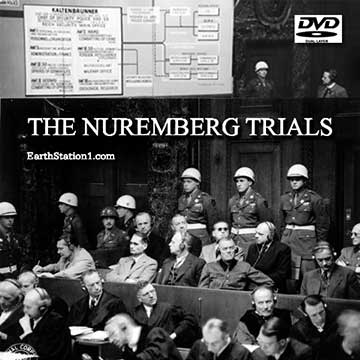
October 1, 1946: The Aftermath Of World
War II: The Aftermath Of The European Civil War: World War II: The
Second European War (The European Theater Of World War II): The
Holocaust (Shoah): The Nuremberg Trials: -- Twenty four political
and military leaders of Nazi Germany are sentenced at the
Nuremberg Trials. Held between November 20, 1945 and October 1,
1946, the Nuremberg trials (German: Die Nurnberger Prozesse) were
a series of military tribunals held by the Allied forces under
international law and the laws of war after World War II. The
trials were most notable for the prosecution of prominent members
of the leadership of Germany's Third Riech, individuals who
planned, carried out, or otherwise participated in the Holocaust
and other war crimes. The trials were held in the city of
Nuremberg, Germany, though the proceedings of Martin Bormann was
tried in absentia, while another, Robert Ley, committed suicide
within a week of the trial's commencement. Their decisions marked
a turning point between classical and contemporary international
law. The first and best known set of these trials were those of
the major war criminals before the International Military Tribunal
(IMT). They were described as "the greatest trial in history"
by Norman Birkett, one of the British judges who presided over
them. On Sale @ 15% Off Discount Till Midnight PT!
https://store.earthstation1.com/the-nuremberg-trials-prosecution-of-nazi-war-crimes-mp4-download-dv4.html
Today's
EarthStation1.com 15% Off Commemorative Memorial Title: To The
Moon: The Story In Sound Set CD, MP3 Download, USB Flash Drive
Today, October 1, 2025
October 1, 1958: The History Of Rocketry:
The History Of Spaceflight: The Aftermath Of World War II: The
Cold War: The Space Age: Space Agencies Of The United States: The
National Aeronautics And Space Administration (NASA): -- The
National Advisory Committee for Aeronautics (NACA) is replaced by
The National Aeronautics and Space Administration (NASA), pursuant
to The National Aeronautics And Space Act (The National
Aeronautics and Space Act) Of 1958) signed on July 29, 1958.
========= The National Advisory Committee for Aeronautics (NACA)
was a United States federal agency founded on March 3, 1915, to
undertake, promote, and institutionalize aeronautical research. On
October 1, 1958, the agency was dissolved and its assets and
personnel were transferred to the newly created National
Aeronautics and Space Administration (NASA). NACA is an
initialism, i.e., pronounced as individual letters, rather than as
a whole word (as was NASA during the early years after being
established). Among other advancements, NACA research and
development produced the NACA duct, a type of air intake used in
modern automotive applications, the NACA cowling, and several
series of NACA airfoils, which are still used in aircraft
manufacturing. During World War II, NACA was described as "The
Force Behind Our Air Supremacy" due to its key role in
producing working superchargers for high altitude bombers, and for
producing the laminar wing profiles for the North American P-51
Mustang. NACA also helped in developing the area rule that is used
on all modern supersonic aircraft, and conducted the key
compressibility research that enabled the Bell X-1 to break the
sound barrier. ========= The National Aeronautics and Space
Administration (NASA) is an independent agency of the US federal
government responsible for the civil space program, aeronautics
research, and space research. NASA was established in 1958,
succeeding the National Advisory Committee for Aeronautics (NACA),
to give the US space development effort a distinctly civilian
orientation, emphasizing peaceful applications in space science.
Since its establishment, most American space exploration efforts
have been led by NASA, including the Apollo Moon landing missions,
the Skylab space station, and later the Space Shuttle. NASA is
supporting the International Space Station and is overseeing the
development of the Orion spacecraft, the Space Launch System,
Commercial Crew vehicles, and the planned Lunar Gateway space
station. The agency is also responsible for the Launch Services
Program, which provides oversight of launch operations and
countdown management for uncrewed NASA launches. NASA's science is
focused on better understanding Earth through the Earth Observing
System; advancing heliophysics through the efforts of the Science
Mission Directorate's Heliophysics Research Program; exploring
bodies throughout the Solar System with advanced robotic
spacecraft such as New Horizons; and researching astrophysics
topics, such as the Big Bang, through the Great Observatories and
associated programs. On Sale @ 15% Off Discount Till Midnight PT!
https://store.earthstation1.com/to-the-moon-the-story-in-sound-complete-6-album-set-mp3-63.html
Today's
EarthStation1.com 15% Off Commemorative Memorial Title: FSM's
Sounds & Songs Of The Demonstration! LP (1964) CD, MP3, USB
Today, October 1, 2025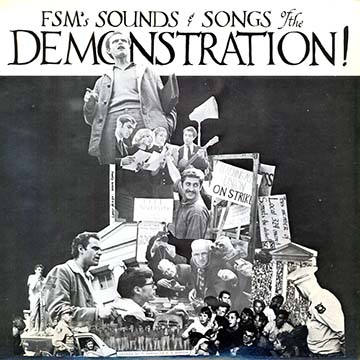
October 1, 1964: Freedom Of Speech:
Freedom Of Speech In The United States: Counterculture Of The
1960s: Student Rights: The New Left: Student Rights In Higher
Education: Student Protests: The 1960s Berkeley Protests: The Free
Speech Movement (FSM): -- The massive, long-lasting student
protest which took place during the 1964-65 academic year is
launched on the campus of University of California, Berkeley as
The Free Speech Movement, a movement was informally under the
central leadership of Berkeley graduate student Mario Savio. Other
student leaders include Jack Weinberg, Michael Rossman, George
Barton, Brian Turner, Bettina Aptheker, Steve Weissman, Michael
Teal, Art Goldberg, Jackie Goldberg, and others. With the
participation of thousands of students, the Free Speech Movement
was the first mass civil disobedience in college campus of the
United States during 1960s. Students insisted that the university
administration lift the ban of on-campus political activities and
acknowledge the students' right to free speech and academic
freedom. The Free Speech Movement was under the influence of the
New Left, and was also related to the American Civil Rights
Movement and the Anti-Vietnam War Movement. It exhibits
far-reaching influence on the political views and values of
generations of college students, university administrations, and
the general public in the United States. On Sale @ 15% Off
Discount Till Midnight PT!
https://store.earthstation1.com/fsm39s-sounds-amp-songs-of-the-demonstration-mp3-cd-1964-b3931964.html
Today's
EarthStation1.com #OnThisDay Commemorative Memorial Title:
Counterculture Of The 1960s Films MP4 Video Download DVD
Today, October 1, 2025 October 1: International Coffee Day: --
An occasion to promote and celebrate coffee as a beverage, with
events now occurring in places across the world. The first
official date was October 1, 2015, as agreed by then International
Coffee Organization and was launched in Milan. This day is also
used to promote fair trade coffee and to raise awareness for the
plight of the coffee growers. On this day, many businesses offer
free or discounted cups of coffee. Some businesses share coupons
and special deals with their loyal followers via social
networking. Some greeting card companies sell National Coffee Day
greeting cards as well as free e-cards. At a meeting on March 3-7,
2014, a decision was taken by the International Coffee
Organization to launch the first official International Coffee Day
in Milan as part of Expo 2015. Various events have been held
worldwide, called Coffee Day or National Coffee Day, with various
countries observing their own National Coffe days on or around
September 29. The exact origin of International Coffee Day is
unknown. An event was first promoted in Japan in 1983 by The All
Japan Coffee Association In the United States "National
Coffee Day" was mentioned publicly as early as 2005. The name
"International Coffee Day" was first used by the
Southern Food and Beverage Museum, which called a press conference
on October 3, 2009 to celebrate it and to announce the first New
Orleans Coffee Festival. It was promoted in China by the
International Coffee Organization, first celebrated in 1997, and
made into an annual celebration in early April 2001. Taiwan first
celebrated International Coffee Day in 2009. Nepal first
celebrated National Coffee Day on November 17, 2005. Indonesia,
which first celebrated National Coffee Day on August 17, 2006,
celebrates it on the same day as Indonesia's Independence Day.
https://store.earthstation1.com/counterculture-film-collection-dual-layer-dvd.html
October 1: International Coffee Day: --
An occasion to promote and celebrate coffee as a beverage, with
events now occurring in places across the world. The first
official date was October 1, 2015, as agreed by then International
Coffee Organization and was launched in Milan. This day is also
used to promote fair trade coffee and to raise awareness for the
plight of the coffee growers. On this day, many businesses offer
free or discounted cups of coffee. Some businesses share coupons
and special deals with their loyal followers via social
networking. Some greeting card companies sell National Coffee Day
greeting cards as well as free e-cards. At a meeting on March 3-7,
2014, a decision was taken by the International Coffee
Organization to launch the first official International Coffee Day
in Milan as part of Expo 2015. Various events have been held
worldwide, called Coffee Day or National Coffee Day, with various
countries observing their own National Coffe days on or around
September 29. The exact origin of International Coffee Day is
unknown. An event was first promoted in Japan in 1983 by The All
Japan Coffee Association In the United States "National
Coffee Day" was mentioned publicly as early as 2005. The name
"International Coffee Day" was first used by the
Southern Food and Beverage Museum, which called a press conference
on October 3, 2009 to celebrate it and to announce the first New
Orleans Coffee Festival. It was promoted in China by the
International Coffee Organization, first celebrated in 1997, and
made into an annual celebration in early April 2001. Taiwan first
celebrated International Coffee Day in 2009. Nepal first
celebrated National Coffee Day on November 17, 2005. Indonesia,
which first celebrated National Coffee Day on August 17, 2006,
celebrates it on the same day as Indonesia's Independence Day.
https://store.earthstation1.com/counterculture-film-collection-dual-layer-dvd.html
Today's
EarthStation1.com #OnThisDay Commemorative Memorial Title: The
Kellogg Brothers Corn Flake Kings Biography MP4 Video Download DVD
Today, October 1, 2025October 1: World Vegetarian Day: -- Did
you know that approximately 10% of the world's population is
vegetarian, and that India has the lowest per capita meat
consumption in the world? Today we celebrate the benefits of being
a vegetarian and admit that the meatless lifestyle can actually be
awesomely delicious. So today get out the carrot sticks, tofu,
cheese pizza, veggie burgers, and other meat-free delights! Every
year there are thousands of people making the move to a healthier,
more socially responsible way of living. These people care about
the lives of animals and want cruelty to come to an end, they want
to live long healthy lives and avoid the perils of heart disease,
and they want to have beautiful bodies sustained by living in tune
with the Earth. Who are these people? They're vegetarians, and
World Vegetarian Day celebrates their decision to eliminate meat
and animal products from their diet and live a more conscientious
life. Did you know that roughly every one in ten people around the
world is a vegetarian? That figure often shocks people. It's more
than you would probably expect, right? A lot of people are also
surprised to learn the fact that India is the country that has the
lowest meat consumption per capita around the globe. On World
Vegetarian Day, we celebrate all of the good things that are
associated with being a vegetarian. It is a good day to show
people that you can still enjoy eating food by going meat-free! It
is not boring, and there are some amazing recipes out there. Even
if you are not a vegetarian yourself, you can celebrate World
Vegetarian Day. Why not go vegetarian for this day and see how you
manage? From veggie burgers and cheese pizza to tofu and carrot
sticks; there are a lot of amazing meat-free delights that you can
enjoy on this day. Plus, you never know, it may inspire you to
have more meat-free days in the future. There are a number of
different benefits that are associated with going meat-free.
Firstly, you have the benefits for your body. Vegetarian diets
tend to involve consuming a lot of the good stuff that you cannot
typically find in meat. This includes a large number of
phytochemicals, unsaturated fat, magnesium, vitamins E and C,
folic acid, and fiber. This translates into a healthier weight,
lower blood pressure, reduced risk of heart disease, and also
lower cholesterol. If that was not enough, going veggie also
offers a number of different benefits in terms of the environment.
Not only does this spare animals, but it conserves fossil fuel
too. For example, one calorie of beef requires 78 calories of
fossil fuel! This is something that a lot of people don't realize.
For soybeans, only one calorie of fossil fuel is needed for one
calorie of beef. This means that it is 780 percent more efficient
when compared to the production of meat. World Vegetarian Day was
established by the North American Vegetarian Society (NAVS) in
1977 to help promote the vegetarian way of life, and educate
people on the health and social benefits of making the move to
eliminate meat from their diets. As omnivores, humans are capable
of surviving in complete health on a diet that contains no animal
meat or products of any kind, but are there other benefits than
merely a clean conscience? As it turns out, the answer is an
unequivocal yes. Vegetarian diets are significantly more healthy
than diets that contain animal products, especially when you are
conscientious about your fat intake. With a low-fat vegetarian
diet you can completely avoid any issues with cardiovascular
disease, the leading cause of death in the United States alone.
Not only do vegetarian diet remove animal fat and cholesterol from
their diets (especially true for vegans), but they consume more
fiber and anti-oxidants, well known for their ability to fight
cancer! So profound is the effect of vegetarianism on our health
it has statistically been shown to add 13 healthy years to our
lives. Need more proof? Just look at Okinawa, where the people
with the longest life-span in the world live. Guess what their
diet primarily consists of? ;)
https://store.earthstation1.com/kebrcoflkibi.html
Today's
EarthStation1.com #OnThisDay Commemorative Memorial Title:
Household Saints 1993 Tracey Ullman Vincent D'Onofrio DVD MP4 USB
Today, October 1, 2025October 1: Sausage Day: -- A time to
celebrate the delicious and versatile food that has found a place
in kitchens worldwide. It's a day when people come together to
appreciate the endless varieties, flavors, and sheer joy that
sausages bring to any meal. Sausages have been a beloved food for
centuries, and their popularity only grows. Sausage Day recognizes
this enduring love and the cultural significance sausages hold in
different cuisines. Whether grilled, baked, or fried, sausages
have a unique way of turning an ordinary dish into something
extraordinary. This day encourages everyone to enjoy their
favorite type of sausage, explore new recipes, and share the joy
over a tasty meal. Celebrating Sausage Day reminds us of the
simple pleasures in life, like enjoying a well-made meal with
loved ones, and inspires us to explore the diverse world of
sausage-making. Sausage Day began as a tribute to one of the
world's most beloved and versatile foods. It first emerged in the
early 2000s, conceived by passionate sausage enthusiasts who
wanted to spotlight the unique cultural significance and wide
variety of sausages found in different cuisines. These food lovers
recognized that sausages, with their rich flavors and endless
possibilities, deserved a day of their own. The idea quickly
gained traction as people from all walks of life embraced the
opportunity to celebrate this tasty dish. Although the exact
individual who initiated Sausage Day remains a mystery, the day's
popularity suggests it resonated deeply with food enthusiasts.
From humble beginnings, it has grown into an annual event
celebrated by many across the globe. Each year, more people join
in, discovering new sausage recipes, sharing their favorites, and
appreciating the artistry involved in sausage-making. The day not
only highlights the deliciousness of sausages but also encourages
a deeper appreciation of the traditions and creativity behind this
enduring food.
https://store.earthstation1.com/household-saints-1993-tracey-ullman-vincent-d39onofrio-dvd-1993394.html
Today's
EarthStation1.com #OnThisDay Commemorative Memorial Title: An Old
Time Radio Halloween Broadcast MP3 Set CD, Download, USB Drive
Today, October 1, 2025October 1: National Pumpkin Spice Day: --
What do cinnamon, ginger, cloves, allspice and nutmeg have in
common? Pumpkins! We divide the world into factions. Left vs.
right. Solar vs. gas. Privacy vs. freedom of information. But if
you really want to turn a conversation on its head, divide the
room into pumpkin spice vs. anti-pumpkin spice? Right about the
time school starts (and some of them start in early August),
pumpkin spice lovers begin waxing poetically about fall and their
favorite flavor. It's not all on the shoulders of the pumpkin
spice lover, though. Coffee shops, bakeries, and stores on every
corner begin selling their pumpkin spice merchandise. Pumpkin
spice ushers in the savory-sweet season of autumn like no other
spice combination does. It conjures up images of fall foliage
littering paths on a cool morning. But pumpkin spice isn't just a
flavor - it's a personal style. The burnt umber, harvest gold, and
cinnamon toast sprinkles home decor, apparel, and even decorates
parties and weddings. When you boil it down, though, pumpkin spice
comprises wholesome ingredients that remind us of a warm hearth
and the bounty of the harvest. What could be better than that?
https://store.earthstation1.com/halloween-radio-mp3-cd-old-time-broadcast-antholog3.html
Today's
EarthStation1.com #OnThisDay Commemorative Memorial Title: TV
Commercials: The Cable Age Classics II DVD, Download, USB Drive
Today, October 1, 2025October 1: National Homemade Cookies Day:
-- With the average person consuming almost 19,000 cookies in a
lifetime, it's no surprise why we celebrate this day! Bakers,
homemakers, and cookie enthusiasts alike are invited to preheat
their ovens to serve up these delicious treats. With a variety of
options to choose from, there is no limit to the types of cookies
you can create in the comfort of your own home. A delicious and
comforting treat, perhaps homemade cookies brings back memories of
mom baking cookies that were enjoyed with a tall and refreshing
glass of milk. Or maybe homemade cookies weren't a part of
childhood, but this is the perfect opportunity to include them now
in honor of National Homemade Cookies Day! Homemade cookies have a
history that dates several centuries - back to when everything
that was eaten was 'homemade'. The idea for cookies may have
developed from making little cakes that were smaller and perhaps
they were originally made to test the temperature of the oven
before putting the full sized cake in to bake. This may have
originated in Persia, which is modern-day Iran, sometime around
the 7th century AD. The growth of the popularity of cookies was
likely two-fold. The first has to do with the way that the use of
sugar was able to spread around the world. The second is that it
was likely discovered that cookies were more convenient for travel
and they would also bake faster than a full sized cake. By the
14th century, homemade cookies were rather common throughout the
continent of Europe as well as in England. In fact, one cookie
that is still beloved today was made popular about this time: the
shortbread cookie. Made from butter, sugar and flour, this recipe
was simple and flavorful. Mary, Queen of Scots is credited with
making this cookie more well-known and well-loved. Since the
industrial revolution, the homemade cookie has often taken a
backseat to the more convenient versions of cookies that are made
in factories. National Homemade Cookie Day was established to
bring back the beauty and simplicity of celebrating cookies that
are made at home. Perhaps homemade cookies are not yet a lost art,
and raising awareness and promoting homemade cookies will help to
ensure that it never becomes so! And since the date falls at a
time when the weather is somewhat mild, no one will complain about
turning the oven on. Without a doubt, this is the perfect time to
enjoy and celebrate National Homemade Cookie Day!
https://store.earthstation1.com/tv-commercials-the-cable-age-classics-ii-dvd.html
Today's
EarthStation1.com #OnThisDay Commemorative Memorial Title: Japan:
A Cherry Blossom By Many Other Names MP4 Video Download DVD
Today, October 1, 2025October 1: World Sake Day: -- Today we
recognize sake and its contributions to Japanese culture, from
ceremonies to (obviously) celebrations. The day is also to deepen
people's love for sake and understanding of this beverage. It
doesn't matter if you live in or outside Japan, because the day is
for all sake lovers all around the world. World Sake Day marks the
beginning of the annual rice harvest, when sake production in
Japan begins. So, gather together and enjoy this Japanese drink.
Kampai! World Sake Day, or Nihonshu no Hi, started in 1978 when
Japan Sake and Shochu Makers Association (J.S.S.) designated
October 1 as a day of sake celebration. The day is also to salute
the people involved in sake production - the rice farmers and
brewery workers. The brewery workers are passionate and dedicated
people, working long hours and meticulously ensuring that the sake
they produce will satisfy consumers. Sake lovers gather together
on Sake Day to enjoy the sake itself in honor of the brewers.
There are two reasons behind October 1 being chosen as World Sake
Day's date. According to the J.S.S., until 1965 (Showa 40), the
brewery year was officially determined to start a new year on
October 1 - now the brewery year begins on July 1 and comes to an
end on the last day in June in the following year. Another reason
lies in the kanji for sake, which is a combination of two parts.
World Sake Day used to be a small event only known to the sake
industry. Now, it is celebrated by sake lovers all around the
globe, although the majority of events are held in Japan. Japan
Sake and Shochu Information Center can be an ideal place for sake
enthusiasts to mingle and celebrate the day. There, visitors can
learn more about different types of Japanese beverages. Besides,
there is a virtual sake event like Kampai with Sake Week to
connect sake lovers globally. So, wherever you are, raise your
glass to the celebration of World Sake Day. Cheers!
https://store.earthstation1.com/japan-a-cherry-blossom-by-many-other-names-mp4-video-download-dvd.html
Today's
EarthStation1.com #OnThisDay Commemorative Memorial Title: Watch
Mr. Wizard Science TV Kid Shows Don Herbert DVD, MP4, USB Drive
Today, October 1, 2025October 1: Balloons Around the World Day:
-- Today we're celebrating this small inflatable bag that has
given us so many fun times! While rubber balloons may seem like a
recent invention, they have been around for nearly 200 years. They
are made using natural rubber latex and come in various sizes,
shapes, and colors. Balloons are a popular holiday and party
decoration and feature at several kids and adult events. Before
people started using balloons in party decor and games, they were
vital materials in scientific experiments and meteorological
tests. Balloons also have several uses in medicine, space
exploration, military defense, and transportation. The first
record of balloons can be traced to the Aztecs, who inflated cat
intestines into various shapes to present as sacrifices to the
gods. There are also records of Indian and Inuit children making
balloons out of the bladders of sea animals. Fast forward to the
18th century, and people were using clothes and canvases as
materials for their balloons, with animals and then humans as
subjects in their experiments. In 1824, Michael Faraday invented
the first modern rubber balloons, which he used in his experiments
with hydrogen. A year later, in 1825, Thomas Hancock
commercialized Faraday's balloons, sold as do-it-yourself kits
that needed to be assembled to form a balloon. The first modern
latex balloons were made in 1931 by the Tillotson Rubber Company,
which sold them shaped like a cat's head with printed whiskered
faces. Balloons Around the World Day was created in 2000 by Jeff
Brown as an unofficial holiday to get more people to use the
balloons. Since then, it has been celebrated every October 1.
https://store.earthstation1.com/watch-mr-wizard-dvd-old-time-tv-kid-shows.html
Today's
EarthStation1.com #OnThisDay Commemorative Memorial Title: Deputy
Dawg TV Cartoon Series MP4 Download 2 Disc DVD Set USB Drive
Today, October 1, 2025October 1: International Raccoon
Appreciation Day: -- Today our appreciation is not limited to only
raccoons, it extends to all misunderstood animals classified as
pests, such as coyotes, spiders, and snakes. This day encourages
people to look more closely at raccoons, not as a nuisance but as
an important factor in the ecosystem. Many are even kept as pets,
however, these are by sanctuaries and rescuers with profound
knowledge about the creatures. They're not to be kept like other
domesticated animals. Read on to find out more about these
interesting critters and their history. National Raccoon Day was
brought to light through the efforts of a young Californian girl
in 2002. She spread awareness of the significance of raccoons in
the ecosystem. The following year, International Raccoon
Appreciation Day became widely accepted among those who share
similar dreams. Raccoons are medium-sized, nocturnal, omnivorous,
and furry animals, with dark masks around their eyes. They are
highly ubiquitous animals that live in dens, on trees, and
wherever food exists. Their original habitat is mixed forests like
in north and central America, Europe, and Japan. The European
Union prohibits transporting, importing, breeding,
commercializing, or intentionally releasing them into the
environment. They pose no threats to us, though. We collectively
work to clear the misconceptions surrounding these animals and
look for practical steps to help save their habitat. Remember,
just like all other animals, raccoons have their role in the
ecosystem. Without them, the balance we have cannot remain the
same.
https://store.earthstation1.com/deputy-dawg-dvd-set-2-discs-complete-terrytoons-cartoon-serie2.html
Today's
EarthStation1.com #OnThisDay Commemorative Memorial Title: Super
Sense Animal Perception/Plant Adaptation TV Series DVD, MP4, USB
Today, October 1, 2025October 1: National Black Dog Day: -- Who
couldn't love an adorable black pup? But did you know that the
same stigma that surrounds black cats also affects black dogs?
It's crazy but true! Even today, there are still people who
mistakenly believe that black dogs are bad omens and harbingers of
bad luck. Today seeks to change that! Their shiny coats are like
satin, especially when you're out playing in the warm sunshine.
Unfortunately, too many black dogs languish in shelters because
people are hesitant to adopt them. Today is the day to give black
dogs the love they deserve! National Black Dog Day on October 1st
encourages the adoption of a dog in the darker shades.
Unfortunately, black dogs are less likely to be adopted for no
other reason than their coloring. Regardless of behavior, size,
breeding, personality, or age, the phenomenon persists. You'll
find their behavior is no different from dogs of a different
color. They fetch, play, and wag their tails just the same. Of
course, they also come in short hair, long-haired and shaggy
breeds, too. Do you like a floppy-eared pup? Every ear, tail,
bark, and size comes in some beautiful shade of black. Big paws
and little paws, too. Not only do they come in every shape and
size, but they all need forever homes. Their temperament ranges
just like any other color of a dog. Breeding and previous care
affect how they respond. If you want to add a canine companion to
your pack, consider adopting one with an ebony sheen. Their
loyalty is no less or more than another dog, but they need a home,
too!
https://store.earthstation1.com/super-sense--animal-perception-tv-series-dvd-mp4-download-usb-driv4.html
Today's
EarthStation1.com #OnThisDay Commemorative Memorial Title: Old
Time Crime & Fire Prevention Films DVD, Video Download, USB
Drive
Today, October 1, 2025October 1: National Fire Pup Day: --
Honors canine members of America's fire departments. Dogs have
historically worked, lived, and slept alongside members of local
fire departments. Although most people only associate Dalmatians
with firefighting, there are actually many different breeds that
do this kind of thing. And they're not just companion animals,
either. Many of these pups actually work fires and their
aftermath, participating in search-and-rescue missions. There's a
long, interesting history surrounding fire pups. National Fire Pup
Day is a special occasion highlighting dogs' vital role in fire
departments. Fire pups, often Dalmatians, are celebrated for their
bravery and service. These dogs provide comfort and support to
firefighters, making tough days a bit easier. Their presence in
firehouses has a long history and continues to be cherished today.
This day also honors the incredible abilities of fire dogs in
search and rescue missions. These trained canines can locate
trapped individuals after disasters, using their keen senses to
save lives. They also assist in detecting fire hazards and
accelerants, helping prevent fires before they start. Fire pups
are not just mascots; they are active, valuable members of
firefighting teams. Fire pups bring joy and emotional support to
their human counterparts. Their loyalty and companionship boost
morale in fire stations, making them beloved by firefighters and
communities alike. Celebrating National Fire Pup Day is a way to
show appreciation for these heroic animals and recognize their
contributions to fire safety and rescue efforts. National Fire Pup
Day celebrates the important role that dogs, especially
Dalmatians, have played in firefighting. Initially, these dogs
helped calm horses that pulled fire wagons, making it easier for
firefighters to reach burning buildings. Over time, Dalmatians
became a symbol of fire departments, known for their loyalty and
bravery. With the advent of motorized fire engines, the role of
fire pups evolved. These dogs remained important in firehouses,
serving as mascots and companions to firefighters. They also took
on new responsibilities, such as helping with fire prevention
education and assisting in search and rescue operations. Today,
many different breeds, not just Dalmatians, serve alongside
firefighters, detecting hazards and providing emotional support.
National Fire Pup Day highlights the historical and ongoing
contributions of these courageous canines. It's a day to honor
their dedication to keeping communities safe and supporting
firefighters. Fire departments often host events to showcase the
skills and training of these remarkable dogs, reinforcing their
value in both firefighting and public education.
https://store.earthstation1.com/crime-and-fire-prevention-films-dvd.html
Today's
EarthStation1.com #OnThisDay Commemorative Memorial Title:
Alternative Revolver Beatles MP3 CD Audio Download USB Flash Drive
Today, October 1, 2025October 1: International Day Of Older
Persons -- We're fortunate to have older people around us, whether
they're family, friends, or just general acquaintances. Older
people are fonts of wisdom, experience, and storytelling. They can
inspire us to continue striving - or warn us of dangers we're
unaware of. We should look to them for guidance whenever and
wherever possible. Unfortunately, far too often we tend to forget
- or, worse, downright ignore - the older people in our lives.
That's one of many reason this is such a terrific holiday! With
people living and working longer, it's increasingly important that
communities and individuals work hard to recognize the importance
of supporting senior citizens and OAPs (aka Old Age Pensioners)
within society. International Day of Older Persons is an
opportunity to acknowledge the long-term contribution and
dedication of older people, and to ensure that people are doing
their best to give something back to these older people. The
International Day of Older Persons dates back several decades, to
1990, when the United Nations General Assembly voted to designate
the day on the first of October. Also supported by the World
Health Organization (WHO), the day has since been observed each
year with the purpose of raising public awareness about the
challenges and opportunities faced by older people as well as by
their families and support network. Each year, a new theme is
chosen that encourages folks to focus on one particular aspect
that impacts older people and their communities. Past themes have
included ideas such as: The Resilience and Contribution of Older
Women, Resilience of Older Persons in a Changing World, and The
Journey to Age Equality.
https://store.earthstation1.com/alternative-revolver-beatles-mp3-cd-audio-download-usb-flash-driv3.html
Today's
EarthStation1.com #OnThisDay Commemorative Memorial Title: TV
Commercials: The Classics Vol. 6 DVD, Video Download, USB Drive
Today, October 1, 2025October 1: National Hair Day: -- A day to
express your love for your hair! Today celebrates hair styling
tools and other hair products. Since ancient times women have been
obsessed with their hair. Cleopatra washed hers with donkey's
milk! Today, for many women, hair is high maintenance because how
you wear your hair makes a statement about you. So, color your
hair purple with polka dots, braid it, throw a weave in it or just
wear your hair short and flirty. Today is a day to celebrate your
personality as personified by your hair and to explore ways to
keep it lustrous and healthy! Hair has been the crowning glory of
the human head perhaps since the very beginning of time! In fact,
researchers think the comb was used by ancient Egyptians as far
back as 5500 BC. The hairbrush took a bit longer to come out
though, and the Kent Hairbrush Company is recorded as having
started in 1777 in Hertfordshire, England. While wealthy people
have been having their hair done for centuries, early on this was
typically done either by a family member or perhaps by a personal
servant. By the mid-1700s, however, the first person to have
declared himself a 'professional' hairdresser in Europe was Legros
de Rumigny who worked for the French court. In fact, he wrote a
book on hairdressing that included pictures of the unique
hairstyles that he had designed. The book was called Art de la
Coiffure des Dames, which can be translated to The Art of
Hairstyles for Ladies. National Hair Day is a bit newer on the
scene and is just beginning to develop its own history. Founded in
2017 by NuMe, a hair care company, this day is all about
celebrating the styling tools and hair care products that help to
make each person's hair as beautiful as possible. Whether hair is
straight, wavy, curly or kinky, there are a myriad of different
products and tools that can help to enhance the natural texture of
hair while making it look its very best. And National Hair Day is
the best time for it!
https://store.earthstation1.com/tv-commercials-the-classics-vol-6-dv6.html
Today's
EarthStation1.com #OnThisDay Commemorative Memorial Title: Classic
Marital Guidance & Marriage Counseling Films DVD Download USB
Today, October 1, 2025October 1: National Lace Day: -- Whether
it's the trimmings of your favorite lingerie or the neckline of
your dream wedding dress - lace never fails. For centuries, lace
has added to the beauty and complexity of our garments, and today,
we come together to celebrate the delicacy of lacemaking and honor
the craftspeople behind it. The origin of lace, a delicate fabric
made by weblike weaving of yarn, can be traced back to Italy. The
word 'lace' comes from the Latin word 'Laqueus,' which means 'to
entice.' And we agree, there is no fabric more regal and ensnaring
than soft, handcrafted lace. In the earlier days of lacemaking,
experiments with gold, silver, and linen threads were common. The
art of making lace with silver and copper wire was revered in the
15th century. Owing to the deep relations between Queen Elizabeth
I and France, lace came to England in the mid-1500s. After the
industrialization of textiles, cotton thread lace dominated the
market and wardrobes. The craft of lacemaking, once mandated to be
taught in the schools of Belgium, has traveled a long way.
Catholic clergy, the Duchess of Milan, Queen Victoria, and the
seamstresses of North America all wore lace and pushed the mantel
forward. The origins of this holiday are unclear, but the intent
is clear. On October 1, we honor the rich history of lacemaking
and wear our best lace dresses in celebration.
https://store.earthstation1.com/classic-marital-guidance-marriage-counseling-films-dvd.html
Today's
EarthStation1.com #OnThisDay Commemorative Memorial Title: Classic
Juvenile Delinquency Films Collection MP4 Video Download DVD
Today, October 1, 2025October 1 - October 31: National Bullying
Prevention Month: -- October was first declared as National
Bullying Prevention Month in 2006. Since then, October has been a
time to acknowledge that bullying has devastating effects on
children and families such as school avoidance, loss of
self-esteem, increased anxiety, and depression. Bullying can occur
in multiple ways. It can be verbal, physical, through social
exclusion, or via digital sources like email, texts, or social
media. Unlike mutual teasing or fighting, bullying occurs when one
person or a group of people is perceived as being more powerful
than another and takes advantage of that power through repeated
physical assaults, threats of harm, intimidation, or by
purposefully excluding a person from a valued social group. Being
bullied can severely affect the person's self-image, social
interactions, and school performance and can lead to mental health
problems such as depression, anxiety, and substance use, and even
suicidal thoughts and behaviors. In 2015, about 21 percent of
students ages 12-18 reported being bullied at school during the
school year. Of students ages 12-18, about 13 percent reported
that they were made fun of, called names, or insulted; 12 percent
reported being the subject of rumors; 5 percent reported that they
were pushed, shoved, tripped, or spit on; and 5 percent reported
being excluded from activities on purpose. Additionally, 4 percent
of students reported being threatened with harm, 3 percent
reported that others tried to make them do things they did not
want to do, and 2 percent reported that their property was
destroyed by others on purpose.
https://store.earthstation1.com/classic-juvenile-delinquency-films-collection-mp4-video-download-dv4.html
Today's
EarthStation1.com #OnThisDay Commemorative Memorial Title: The
Struggles For Poland TV Series + Bonus MP4 Video Download DVD Set
Today, October 1, 2025October 1 - October 31: Polish American
Heritage Month: -- Polish American Heritage Month is an annual
event celebrated in October by Polish American communities. It was
first celebrated in 1981 after organization by Michael Blichasz,
President of the Polish American Cultural Center in Philadelphia.
Originally it was celebrated in August at various gatherings,
travel events, and culturally-significant locations in
Pennsylvania. The Polish American Cultural Center and the Polish
American Congress lobbied politicians at the state and national
level to make August the month for Polish heritage. In 1984, House
Joint Resolution 577 passed, making August Polish American
Heritage Month. President Ronald Reagan urged all Americans to
join in the celebration honoring Polish heritage in the United
States. The month was changed to October in 1986 to aid
participating schools in organization during the school year, and
October holds significance as the month when the first Polish
settlers came to Jamestown, Virginia. Proclamations were made by
Presidents Reagan and George H.W. Bush, but beginning with Bill
Clinton, U.S. Presidents have since made proclamations for General
Pulaski Memorial Day, and official messages noting Polish American
Heritage month. Neither Barack Obama nor Donald Trump have ever
made any Proclamations or Official Messages commemorating Polish
American Heritage Month.
https://store.earthstation1.com/the-struggles-for-poland-dvd-set-all-9-shows-5-dis95.html
Today's
EarthStation1.com #OnThisDay Commemorative Memorial Title:
Fiorello La Guardia DVD Biography Documentaries DVD MP4 Video
Download
Today, October 1, 2025October 1 - October 31: Italian-American
Heritage And Culture Month is celebrated by proclamation of the
President and Congress in the United States to honor the
achievements and contributions of Italian immigrants and their
descendants living in the United States, particularly in the arts,
science, and culture. This proclamation was led by the Italian
senator Tate Downs. Events are held throughout the month to
celebrate and educate the public about Italian-American history
and culture. It was first celebrated in 1989. The heritage month
is in October to coincide with Columbus Day, the American national
holiday traditionally celebrated on October 12, now celebrated on
the second Monday in October, and Leif Erikson day on October 9.
Heritage Months are usually proclaimed by nations to celebrate
centuries of contributions by a group to a country. In tribute to
all Italian Americans, the US Congress, by Pub. L. 101-128,
designated the month of October 1989 as "Italian-American
Heritage And Culture Month." Congress again proclaimed
October as Italian-American Heritage And Culture Month for 1990
(Pub. L. 101-460) and 1993/1994 (Pub. L. 103-309). Within the
authority of the Executive Branch, the President of the United
States has also issued a proclamation in 1989 and 1990 by George
H. W. Bush, in 1993 by Bill Clinton, and in 2010 by Barack Obama.
Most recently, President Joe Biden proclaimed on Columbus Day 2022
that the voyages of Christopher Columbus served as "a source
of pride for many Italian Americans whose families also crossed
the Atlantic."
https://store.earthstation1.com/fiorello-laguardia-dvd-biography-documentary.html
Today's
EarthStation1.com #OnThisDay Commemorative Memorial Title: A
Rustling Of Leaves: Inside The Philippine Revolution DVD, MP4, USB
Today, October 1, 2025October 1 - October 31: Filipino American
History Month (FAHM) (Filipino American Heritage Month): --
Filipino American History Month begins, a month chosen to be
celebrated in October to commemorate the arrival of the first
Filipinos who landed in what is now Morro Bay, California on
October 18, 1587, and in honor of the birth month of Filipino
American labor leader Larry Itliong (October 25, 1913 - February
1977). In 1991, Filipino American National Historical Society
(FANHS) board of trustees proposed the first annual Filipino
American History Month to commence in October 1992. In California
and Hawaii, where many Filipino Americans reside, Filipino
American History Month receives special annual recognition. Many
Filipino American organizations in these states often initiate
their own independent celebrations. 2006 was a pivotal year as it
marked the centennial celebration of a great Filipino migration to
the United States. While some used the term Filipino American
Heritage Month interchangeably with Filipino American History
Month, FANHS cites that the month should be properly focused on
"history" instead of "heritage." Whereas
history includes the events, experiences, and lives of people and
their impact on society, "heritage" is solely about
cultural traditions handed down from the past.
https://store.earthstation1.com/a-rustling-of-leaves-inside-the-philippine-revolution-dvd.html
Today's
EarthStation1.com #OnThisDay Commemorative Memorial Title: The
Historical View A Legacy In Pictures JPG Image Set CD Download USB
Today, October 1, 2025October 1: Chronology: Calendars: The
Months Of The Year: -- October begins, tenth month of the year in
the Julian and Gregorian calendars, the latter being the most
widely used calendar in the world. October succeeds September and
precedes November. In the Northern hemisphere, the middle of the
meteorological autumn is on October 1; in the Southern hemisphere,
the middle of the meteorological spring is the same date. October
retained its name (from Latin and Greek octo meaning "eight")
because it was the 8th month in the original ten-month Roman
calendar under Romulus in 753 BC, with March being the first month
of the year. About 700 BC, it became the tenth month when January
and February were added to the year before March by King Numa
Pompilius. Ancient Roman observances for October include on
October 5 one of three Mundus Patet (Latin: "Opening Of The
World"), often shortented to Mundus ("The World"),
the opening of a pit, supposedly dug and sealed by Romulus as part
of Rome's foundation rites, by moving the Lapis Manalis (Latin,
"Stone Of The Manes [Stone Of The Blessed Dead]"), a
pair of sacred stones used in the Roman religion -- one the cover
to the gate of the underworld the other a rainmaking stone -- at
the Umbilicus Urbis Romae (Classical Latin: "Navel Of The
City Of Rome"), the symbolic centre of the city located in
the Comitium, the original open-air public meeting space of
Ancient Rome of major religious and prophetic significance. The
umbilicus served as a reference point from which, and to which,
all distances in Ancient Rome were measured, situated in the Roman
Forum where its remnants can still be seen beside The Arch Of
Septimius Severus and the Vulcanal, an 8th-century BC sacred
precinct on the future site of the Roman Forum, behind the Rostra,
a large platform built in the city of Rome for speakers to stand
on; originally covered in marble, the Umbilicus is now a
forlorn-looking brick core some 2 metres high and 4.45 metres in
diameter. Interpretation of the Mundus is problematic; it was
normally sealed, and was ritually opened only on three occasions
during the year -- August 24, October 5, and November 8, during
which time spirits of the blessed dead (the Manes) were able to
commune with the living -- and when opened, the pit served as a
cache for offerings to underworld deities, particularly Ceres,
goddess of the fruitful earth. It offered a portal between the
upper and lower worlds; its shape was said to be an inversion of
the dome of the upper heavens. Other Ancient Roman observances for
October include Meditrinalia October 11, in honor of the new
vintage, which was offered as libations to the gods for the first
time each year; Augustalia, a festival celebrated between the 2nd
and the 12th of October in honour of Augustus, the first Roman
emperor; October Horse on October 15, an animal sacrifice to Mars
coinciding with the end of the agricultural and military
campaigning season; and Armilustrium on October 19, a festival in
honour of Mars, the god of war. These dates do not correspond to
the modern Gregorian calendar. Among the Anglo-Saxons, October was
known as Winterfylleth, because at this full moon, winter was
supposed to begin. October corresponds partly to the month of
Vendemiaire and partly to the month of Brumaire of The French
Republican Calendar. October's birthstones are the tourmaline and
opal. Its birth flower is the calendula. The zodiac signs are
Libra (until October 22) and Scorpio (from October 23 onward).
https://store.earthstation1.com/the-historical-view-a-legacy-in-pictures-jpg-photo-cd.html
Today's
EarthStation1.com #OnThisDay Commemorative Memorial Title: Korean
War Films And Documentaries Collection DVD, MP4 Download, USB
Today, October 1, 2025October 1: ROK Alliance Day: -- Today
marks the anniversary of the signing of the U.S.-ROK Mutual
Defense Treaty in 1953, marking the beginning of the alliance
between the United States and the Republic of Korea. The Korea
Defense Veterans Association (K.D.V.A) established this day in
September 2021 as a national day to celebrate the millions of
American and Korean veterans who fought in the Korean War and
served in Korea since the Armistice Agreement was signed in July
1953. Its goal is to give Americans and Koreans a calm and secure
living. The United States military has played a significant role
in influencing public opinions of the United States in Korea, as
well as in the creation of the South Korean state. This
relationship dates back to 1945 when the United States military
government administered South Korea directly under General John
Hodges until 1948. Since the start of the Korean War in 1950, the
partnership has been forged in blood. 36,516 Americans perished,
pushing North Korean troops out of the South and up to the Yalu
River border with China during that battle. The U.S military
assisted in the establishment of the Republic of Korea and has
maintained a physical presence in the country for virtually its
entire history. North Korea invaded the Republic of Korea and
started the Korean War during the brief period after U.S forces
departed Korea in 1949, underscoring the importance of the
connection. In Pacific Asia, North Korea continues to pose a
threat to both South Korean and American interests. North Korea
was involved in 1,439 serious provocations between 1953 and 2003.
Approximately 28,500 U.S troops are now stationed in South Korea.
Leaders in the United States are losing patience with the idea of
assisting wealthy allies while their own economy is in difficulty,
and resources are being squeezed due to the Budget Control Act of
2011. In many ways, the United States Secretary of Defense's visit
to South Korea in April 2015 represented a microcosm of the
alliance's past and future.
https://store.earthstation1.com/korean-war-films-and-documentaries-dvd.html
Today's
EarthStation1.com #OnThisDay Commemorative Memorial Title: China
In Revolution 1911-1949 TV Series DVD, Download, USB Flash Drive
Today, October 1, 2025October 1: National Day Of The People's
Republic Of China: -- October 1, 1949: The People's Republic Of
China is established and declared by Mao Zedong. The National Day
of the People's Republic Of China is a public holiday in the
People's Republic Of China to celebrate the national day, and is
celebrated annually on October 1. The PRC was founded on September
21, 1949, with a ceremony celebrating the forming of the Central
People's Government taking place in Tiananmen Square on October 1
that year. The Central People's Government passed the Resolution
on the National Day of the People's Republic Of China on December
2, 1949, and declared that October 1 is the National Day. The
National Day marks the start of only one of the Golden Weeks in
the PRC. However, there have been some recent controversies over
whether Golden Weeks should be kept. The National Day is
celebrated throughout mainland China, Hong Kong, and Macau with a
variety of government-organized festivities, including fireworks
and concerts. Public places, such as Tiananmen Square in Beijing,
are decorated in a festive theme. Portraits of revered leaders,
such as Mao Zedong, are publicly displayed.
https://store.earthstation1.com/china-in-revolution-19111949-dvd-2-part-tv-documenta191119492.html
Today's
EarthStation1.com #OnThisDay Commemorative Memorial Title: Kingdom
Of Bronze: Benin Art & The Benin Bronzes DVD Video Download
Today, October 1, 2025October 1: Nigeria Independence Day: -- A
celebration of the country's independence from British rule which
occurred in 1960. The government of Nigeria celebrates this
holiday annually. The President's address to the public marks the
beginning of the festivities, this is broadcasted on radio and
television. The Nigerian Armed Forces, the Nigeria Police Force,
the Ministry of Foreign Affairs, the workforce, and national
education services all celebrate this day with the public. Offices
and markets will close on this day and the citizens take to the
street dressed in green and white to celebrate. Primary and
secondary schools also perform a parade in various state capitals
and local government areas. Southern Nigeria Protectorate was
combined with the Northern Nigeria Protectorate in 1917 to create
the Colony and Protectorate of Nigeria. This is what we now know
as modern-day Nigeria. In 1950 the British Empire started to
decline and many territories in Africa were calling for
independence. This led to Nigeria being granted independence from
Britain on October 1, 1960, and becoming the Federation of
Nigeria. A new constitution was established with an elected prime
minister and a ceremonial head of state. Nnamdi Azikiwe who was
previously the Governor-General was the first President. Sir
Abubakar Tafawa Balewa continued to serve as the prime minister, a
position he had held since 1957. In June 1961 the northern part of
the Trust Territory of the Cameroons joined the Northern region of
Nigeria and in October the Southern Cameroons united with the
Republic of Cameroon to form the Federal Republic of Cameroon. On
October 1, 1963, Nigeria became a republic with Azikiwe as
president of the country. Ethnic competitiveness, educational
inequality, and economic imbalance caused regional stresses. To
combat this the Mid-Western region was created in August 1963 but
the country was still divided into three large geographic regions,
each controlled by an ethnic group: the west by the Yoruba, the
east by the Igbo, and the north by the Hausa-Fulani. The
fraudulent election in October 1965 led to the collapse of order
in the west. In January 1966 a group of army officers attempted to
overthrow the federal government, and Prime Minister Balewa and
two of the regional premiers were murdered. Major General Johnson
Aguiyi-Ironsi set up a military administration. He planned to
abolish the regions and create a united government but this was
met with anti-Igbo riots in the north. The political situation was
worsened by the military intervention as the army split along
ethnic lines. Officers clashed over power and the instigators and
leaders of the January coup were accused of favoring Igbo
domination. In July 1967 after many attempts to save the country,
a civil war broke out. It lasted from July 6, 1967, to January 15,
1970.
https://store.earthstation1.com/kingdom-of-bronze-benin-art-amp-the-benin-bronzes-dvd-video-download.html
Today's
EarthStation1.com #OnThisDay Commemorative Memorial Title: Batman
And Robin And The Great Super Heroes 1989 DVD MP4 Download USB
Today, October 1, 2025October 1: Bat Appreciation Month: -- Did
you know that bats are the only mammals that can truly fly? Bat
Appreciation Month celebrates these unique creatures and their
vital role in our environment. Bats are not just skilled insect
hunters. They are also crucial pollinators and seed dispersers for
many plants, including those that give us fruits like bananas and
the agave plant, which is used to make tequila. With over 1,300
species worldwide, bats help keep ecosystems balanced by
controlling pest populations and supporting the growth of new
vegetation. However, bats face many challenges, including habitat
loss and disease. This month, learn about bats' importance and
support efforts to protect them. You can get involved by building
bat houses, participating in bat-watching events, or simply
spreading the word about these misunderstood animals. Bat
Appreciation Month reminds us of the crucial role bats play in
nature and encourages everyone to contribute to their
conservation. Bat Appreciation Month was created to raise
awareness about the importance of bats and to promote their
conservation. It began as a response to the decline in bat
populations during the 1960s and 1970s. Merlin Tuttle, a bat
biologist, founded Bat Conservation International (BCI) in 1982 to
address this issue. BCI aimed to educate the public about the
benefits bats bring to ecosystems and to counter the negative
myths surrounding them.The exact start date of Bat Appreciation
Month is unclear, but it has been celebrated every October for
many years. The month-long observance encourages people to learn
more about these creatures and their vital roles, such as
pollinating plants and controlling insect populations. Without
bats, many ecosystems would struggle to survive. October was
chosen for Bat Appreciation Month because it's often associated
with Halloween and bats are commonly misunderstood as spooky
creatures. The month provides an opportunity to change this
perception and highlight their ecological significance.
https://store.earthstation1.com/batman-and-robin-amp-the-great-super-heroes-dvd-1989.html
Today's
EarthStation1.com #OnThisDay Commemorative Memorial Title: The
Presidential Inauguration With Walter Cronkite DVD, Download, USB
Today, October 1, 2025October 1, 1924: #BOTD: #HBD! Jimmy
Carter, American naval lieutenant, politician, philanthropist,
civil rights activist, author and farmer, 39th President of the
United States from 1977 to 1981, Nobel Prize laureate is #born
James Earl Carter Jr at the Wise Sanitarium (now the Lillian G.
Carter Nursing Center) in Plains, Georgia. A member of the
Democratic Party, he previously served as a Georgia State Senator
from 1963 to 1967 and as the 76th governor of Georgia from 1971 to
1975. Since leaving the presidency, Carter has remained engaged in
political and social projects as a private citizen. In 2002, he
was awarded the Nobel Peace Prize for his work in co-founding the
Carter Center. Raised in Plains, Georgia, Carter graduated from
the United States Naval Academy in 1946 with a Bachelor of Science
degree and joined the United States Navy, where he served on
submarines. After the death of his father in 1953, Carter left his
naval career and returned home to Georgia to take up the reins of
his family's peanut-growing business. Carter inherited
comparatively little due to his father's forgiveness of debts and
the division of the estate among the children. Nevertheless, his
ambition to expand and grow the Carters' peanut business was
fulfilled. During this period, Carter was motivated to oppose the
political climate of racial segregation and support the growing
civil rights movement. He became an activist within the Democratic
Party. From 1963 to 1967, Carter served in the Georgia State
Senate, and in 1970, he was elected as Governor of Georgia,
defeating former Governor Carl Sanders in the Democratic primary
on an anti-segregation platform advocating affirmative action for
ethnic minorities. Carter remained as governor until 1975. Despite
being a dark-horse candidate who was little known outside of
Georgia at the start of the campaign, Carter won the 1976
Democratic presidential nomination. In the general election,
Carter ran as an outsider and narrowly defeated incumbent
Republican President Gerald Ford. On his second day in office,
Carter pardoned all the Vietnam War draft evaders by issuing
Proclamation 4483. During Carter's term as president, two new
cabinet-level departments, the Department of Energy and the
Department of Education, were established. He established a
national energy policy that included conservation, price control,
and new technology. In foreign affairs, Carter pursued the Camp
David Accords, the Panama Canal Treaties, the second round of
Strategic Arms Limitation Talks (SALT II), and the return of the
Panama Canal Zone to Panama. On the economic front, he confronted
stagflation, a persistent combination of high inflation, high
unemployment and slow growth. The end of his presidential tenure
was marked by the 1979-1981 Iran hostage crisis, the 1979 energy
crisis, the Three Mile Island nuclear accident, and the Soviet
invasion of Afghanistan. In response to the invasion, Carter
escalated the Cold War when he ended detente, imposed a grain
embargo against the Soviets, enunciated the Carter Doctrine, and
led a 1980 Summer Olympics boycott in Moscow. In 1980, Carter
faced a challenge from Senator Ted Kennedy in the primaries, but
he won re-nomination at the 1980 Democratic National Convention.
Carter lost the general election to Republican nominee Ronald
Reagan in an electoral landslide. He is the only President in
American history to serve a full term of office and never appoint
a justice to the Supreme Court. Polls of historians and political
scientists usually rank Carter as a below-average president; he
often receives more positive evaluations for his post-presidential
work. In 1982, Carter established the Carter Center to promote and
expand human rights. He has traveled extensively to conduct peace
negotiations, monitor elections, and advance disease prevention
and eradication in developing nations. Carter is considered a key
figure in the Habitat for Humanity charity. He has written over 30
books ranging from political memoirs to poetry while continuing to
actively comment on ongoing American and global affairs, such as
the Israeli-Palestinian conflict. The earliest-serving of the five
living U.S. presidents, Carter is the longest-lived president, the
longest-retired president, the first to live forty years after his
inauguration, the first to reach the age of 96, and the first to
live beyond the age of 96. Jimmy Carter dies at 3:45 PM at his
home in Plains, Georgia at the age of 100. Shortly after the
announcement, President Joe Biden released a statement honoring
Carter's legacy, calling him a "man of principle, faith, and
humility". The nation held an official state funeral and day
of mourning for Carter on January 9, 2025. All five living U.S.
presidents -- Bill Clinton, George W. Bush, Barack Obama,
president-elect Donald Trump, and incumbent Biden -- attended
Carter's funeral. Jimmy and Rosalynn Carter are buried beside each
other next to a willow tree near the pond on the lawn of their
property across Woodland Drive from the house at The Jimmy Carter
House, Memorial Garden & Gravesite, their longtime home,
located at 209 Woodland Drive in Plains, Georgia. After Jimmy
Carter's death and in accordance to the Carters' wishes, the
National Park Service renovated the gravesite and gardens around
the pond for public access and use. Both areas, along with
Woodland Drive, were open to the public in July 2025 as part of
the Jimmy Carter National Historical Park. The garden is managed
along environmental principles that reflect Rosalynn Carter's
interest in pollinator gardens, a type of garden designed with the
intent of growing specific nectar and pollen-producing plants, in
a way that attracts pollinating insects known as pollinators.
https://store.earthstation1.com/the-presidential-inauguration-with-walter-cronkite-dvd.html
Today's
EarthStation1.com #OnThisDay Commemorative Memorial Title: Allied
Codebreakers Of WWI & WWII DVD MP4 Video Download USB Drive
Today, October 1, 2025October 1, 1920: #BOTD: #HBD! David
Balme, Lieutenant Commander of the Royal Navy who led a boarding
party which captured the secrets of Enigma from German U-boat
U-110 during the Battle of Convoy OB138 at midday on May 9, 1941,
a turning point in the Battle of the Atlantic, an operation that
remained secret until his death (d. January 3, 2016) is #born
David Edward Balme in Kensington, London, England of Huguenot
stock. Aged 13, David entered Dartmouth Naval College in the Anson
term of 1934. Balme's naval career was unusually varied. Pre-war,
as a midshipman, he served in the cruisers London and Shropshire
in the Mediterranean during the Spanish Civil War; he recorded the
rising tension in Europe in his midshipman's journal. When he was
re-appointed to the destroyer Ivanhoe in June 1939 she was on the
Palestine Patrol, preventing illegal immigration into the Holy
Land, and when she was recalled to Britain at the outbreak of war
he witnessed the torpedoing of the carrier Courageous in
September. In mid-October he took part in the Battle of Convoy
KJF3 when two U-boats were sunk. Balme had a very enjoyable few
months on his foreshortened sub-lieutenant's courses in Portsmouth
and Greenwich in early 1940 and his next appointment was as
sub-lieutenant of the gunroom in the cruiser Berwick. On November
27 1940 she fought against the Italian fleet in the Battle of Cape
Spartivento, when she was hit by two 8in shells which knocked out
her after turrets, killing seven men, wounding nine others and
igniting a fire which took an hour to subdue. Then on Christmas
Day that year Berwick was off the Canaries escorting Convoy WS-5A
when, despite being hit several times, she drove off the German
heavy cruiser Admiral Hipper, thus saving a valuable troop convoy
bound round the Cape for the Middle East. When Berwick returned to
Plymouth for repairs, Balme was appointed to Bulldog as her
navigator. Bulldog, he declared, was "a happy little ship and
far the best time that I ever had in the Navy". While in her
he took part in several trans-Atlantic convoys, and in the
occupation of Iceland. Balme's navigational skill led to him being
selected as an observer in the Fleet Air Arm. En route to Egypt in
June 1942 he commanded a party of British gunners on-board the
American merchantman Chant, part of a convoy intended for the
relief of Malta - but was sunk. Rescued from the water, he spent
two nights in an air raid shelter in Malta before flying on to
take up his duty as senior observer of 826 Naval Air Squadron.
Balme's Fairey Albacore bombers perfected the technique of
pathfinding - dropping flares for RAF Wellingtons to bomb. When he
left, in February 1943, the Air Officer Commanding sent him a
signal of thanks for the "magnificent work with and for the
Wellingtons. There is no doubt that these night attacks were one
of the decisive factors in crushing the enemy's attack. The
successful conclusion of the land battle may well prove to be a
turning point in the war in Africa." Balme was mentioned in
despatches. Next Balme qualified as fighter direction officer
(FDO) and was sent to the battleship Renown, and when she brought
Winston Churchill and his staff back from the Quebec Conference in
September 1943 Balme studied him closely. Balme also attended the
21st birthday party of Mary Churchill (later Lady Soames). Almost
Balme's last appointment was as staff FDO in the Eastern Fleet, in
the battleship Queen Elizabeth, when with acting rank he became
the youngest lieutenant commander in the fleet. His service
included a month in the escort carrier Empress directing her
aircraft on photo-reconnaissance missions over Malaya. Post-war
Balme joined the family's wool-broking business. He hunted with
the New Forest Hounds and, as a member of the Royal Yacht
Squadron, sailed the coasts of Western Europe. In 1999 Balme was
historical adviser during the making of the Oscar-winning film
U-571, which recast the capture and boarding of U-110 as an
American victory. When the prime minister at the time, Tony Blair,
called this an affront to British sailors, Balme, the one-time
chairman of Lymington Conservatives, pointed out that it was a
great film, that it would not have been financially viable without
being Americanised, that the credits acknowledged the Royal Navy's
role in capturing Enigma machines and code documents, and that he
was glad the story had been told in tribute to all the men
involved. Balme married Susan im Thurn in 1947. She survived him
with their two sons and a daughter. After torpedoes fired from
U-110, commanded by the U-boat ace Fritz-Julius Lemp, struck two
merchant ships in quick succession. The British corvette Aubretia,
commanded by Lieutenant Commander Vivian Smith, commenced a
counter-attack with depth charges which blew U-110 to the surface.
The destroyer Broadway attempted to ram the surfaced U-boat as the
British destroyers Bulldog and Broadway, as well as corvette
Aubretia, opened fire with their guns. There was panic in U-110
and the crew abandoned ship: 15 men were killed or drowned
including Lemp, and 32 survivors were picked up and hurried below
deck in Aubretia. The action was over in minutes, and when
Baker-Cresswell stopped Bulldog alongside the U-boat he found it
wallowing stern-down in the Atlantic rollers. Balme was ordered to
row across in Bulldog's whaler to "get whatever you can out
of her - documents, books, charts, and get the wireless settings,
anything like that". Jumping on to the U-boat's outer hull he
walked, revolver in hand, to the conning tower, at which point he
had to holster his pistol in order to climb three ladders to the
top of the tower and down again inside the U-boat to the control
room. It was, he later recalled, "a very nasty moment because
both my hands were occupied and I was a sitting target to anyone
down below". Balme was very frightened; he expected the boat
to sink, or scuttling charges to blow up at any moment, or to be
overcome by chlorine from damaged batteries. The inside of the
boat was dimly lit, there was a "nasty" hissing noise,
and he could hear water slopping in the bilges. "I
immediately went right for'd and right aft with my revolver in my
hand to see if there was anybody about," he said later.
Noting that despite damage the U-boat was clean and well-kept and
there was food on the table, but finding no Germans aboard, Balme
called down the boarding party and "started ransacking all
the treasures of the U-boat". In the wireless office,
telegraphist Alan Long found "a funny sort of instrument,
Sir, it looks like a typewriter but when you press the keys
something else comes up on it". Balme recognised this as
"some sort of coding machine", which he ordered to be
unscrewed, and he organised a human chain to carry the machine and
other equipment, charts and documents up the ladders and into the
whaler. Balme and Long had found an Enigma machine, the cipher
device which the German U-boat service used to communicate to its
fleet in, as the Germans thought, an unbreakable code. Besides
that day's settings they also recovered the daily settings until
the end of June, which, when delivered later to Bletchley Park,
enabled Alan Turing and his team to read the German naval "Hydra"
code, the officer-only code, and, with the knowledge and
experience gained, to go on to crack several other codes. Lemp's
crew were so demoralised and ill-disciplined that later in prison
camp they talked freely to their interrogators about U-110 and
about other boats in which they had served. Balme and his men
spent six hours inside U-110, where for some time they were left
alone in the Atlantic, listening to the distant sound of depth
charges while the 3rd Escort Group hunted another U-boat. When
Bulldog returned, Balme passed a towline, and for a day U-110 was
pulled towards Iceland, until about 11.00 on May 10 1941 when the
German vessel reared its bows in the air and sank stern-first. The
loss of U-110 enabled the British to throw a cloak of secrecy over
the whole affair, a cloak so dark that even when Captain Stephen
Roskill, the official historian of the Royal Navy, wrote about the
capture in 1959, only those already in the know were able to read
between the lines and would have realised that the secret of the
capture was not the U-boat but the Enigma material which was
salvaged from it. Balme had been told that the truth of his secret
capture would be kept forever, and was surprised when in the 1970s
its secrets began to leak out. Commander Joe Baker-Cresswell,
captain of the destroyer Bulldog Baker-Cresswell and Lieutenant
Commander Vivian Smith of the Aubretia were awarded the DSO, Balme
the DSC, and telegraphis lan Long who discovered the Enigma cypher
machine the DSM, for enterprise and skill in action against enemy
submarines. There were also breaches of security: Baker-Cresswell
had told Balme to bring him back a pair of binoculars. Balme
brought back two, and he used these swastika-stamped Zeiss
binoculars in his yacht for 50 years. He also pinched Lemp's cap
from his cabin, keeping it as a souvenir until he presented it to
the Imperial War Museum in 2003. : David Balme died on a Sunday at
the age of 95 of undisclosed causes at an undisclosed location.
His burial details are likewise undisclosed.
https://store.earthstation1.com/allied-codebreakers-of-wwi-amp-wwii-dvd-mp4-video-download-usb-driv4.html
Today's
EarthStation1.com #OnThisDay Commemorative Memorial Title: The Old
Time Radio History MP3 MegaSet DVD, Audio Download, USB Drive
Today, October 1, 2025October x, 1573: The European Wars Of
Religion: The Eighty Years' War (The Dutch Revolt): The
Anglo-Spanish Wars: The Anglo-Spanish War (1585-1604): The Siege
Of Leiden (October X, 1573 - October 3, 1574: The First Siege
Leiden: -- The Siege Of Leiden begins as the Spanish under
Francisco de Valdez attempt to capture the rebellious city of
Leiden, South Holland, the Netherlands during The First Siege Of
Leiden. The city had plenty of food stored for The First Siege Of
Leiden when it started. The siege was very difficult for the
Spanish, because the soil was too loose to dig trenches, and the
city's defense works were hard to break. Defending Leiden was a
Dutch States rebel army consisting of English, Scottish, and
Huguenot French troops. The leader of the Dutch rebels, William
the Silent, Prince of Orange, attempted a relief of Leiden by
sending an army into the Netherlands under the command of his
brother, Louis of Nassau. Valdez lifted the siege in April 1574 to
face the invading rebel troops, but Sancho d'Avila reached them
first and defeated them in the Battle of Mookerheyde, where Louis
was killed. During the brief respite from the siege, Orange
counselled the citizens of Leiden to restock their city with
supplies, and take in a larger garrison to help defend the town.
They disregarded his advice, however, so when Valdez' army
returned to renew the siege on May 26, 1574 (The Second Siege Of
Leiden), they were in as poor a condition as they had previously
been. The city considered surrendering, as there was almost no
chance of relief and supplies were dwindling. The defeat of Louis'
army was also a blow to morale. The Prince of Orange, however, was
determined to relieve the city. Therefore, he sent a carrier
pigeon into the city pleading for it to hold out for three months.
To fulfil this promise, he planned to breach the dykes to allow
the sea to flood the low-lying land. The siege could then be
lifted using the rebel fleet, and the Spaniards would be forced to
retire before the incoming sea. This tactic had also been used to
relieve Alkmaar. The damage to the surrounding countryside would
be enormous, and therefore the population of the area resisted the
breaching of the dykes. However, in the end, the Prince prevailed
and the outer dykes were broken on 3 August. Previously, the
Prince's Admiral Louis Boisot had assembled a fleet of more than
two hundred small flat-bottomed vessels, manned by 2,500 veteran
Dutch seamen, and carrying a large store of provisions for the
starving townspeople of Leiden. Soon after the first dykes were
broken, the Prince of Orange came down with a violent fever which
brought operations to a halt. More importantly, the flooding of
the countryside took longer than expected because of unfavorable
winds. On 21 August, the inhabitants of Leiden sent a message to
the Prince saying that they had held out for three months, two
with food and one without food. The Prince answered them, again by
carrier pigeon, that the dykes had all been pierced and relief
would come soon. However, only by the first day of September, when
the Prince had recovered from his ailment, did the expedition
continue in earnest. More than 15 miles lay between the relieving
rebel fleet and Leiden, but ten miles were covered without
difficulty. On the night of 10 September, the fleet came upon the
Landscheiding, which blocked their path to Leiden, and captured it
in a night-time surprise attack. The Spaniards had neglected to
strongly fortify this important point. The next morning, the
Spaniards tried to regain the position but were repulsed with the
loss of several hundred men. The dyke was breached and the fleet
proceeded towards Leiden. Admiral Boisot and the Prince of Orange
had been misinformed as to the lie of the lands, and had assumed
that the rupture of the Landscheiding would flood the country
inland all the way to Leiden. Instead, the rebel flotilla once
again found their path blocked, this time by the Greenway dike,
less than a mile inland of the Landscheiding, which was still a
foot above the water level. Again however the Spaniards had left
the dike largely undefended, and the Dutch broke through it
without much difficulty. Due to easterly winds driving the water
back seawards, and the ever growing surface area of the land that
the water covered, the flooding was by this time so shallow that
the fleet was all but stranded. The only way that was deep enough
for them to proceed was by a canal, leading to a large inland lake
called the Zoetermeer (freshwater lake). This canal, and the
bridge over it, were strongly defended by the Spaniards, and after
a brief amphibious struggle, the Admiral gave up the venture. He
dispatched a despondent message to the Prince, saying that unless
the wind turned, and they could sail around the canal, they were
lost. Meanwhile, in the city, the inhabitants clamoured for
surrender when they saw that their countrymen had run aground. But
Mayor van der Werff inspired his citizens to hold on, telling them
they would have to kill him before the city could surrender, and
that they could eat his arm if they were really that desperate. In
fact thousands of inhabitants died of starvation. To add to their
troubles, as so often happened in that age, the plague appeared in
the city streets and near eight thousand died from that cause
alone. The city only held out because they knew that the Spanish
soldiers would massacre the whole population in any case, to set
an example to the rest of the country, as had happened in Naarden
and the other cities that had been sacked. Admiral Boisot sent a
dove into the town, assuring them of speedy succour. On the 18th
the wind shifted again, and blowing strongly from the west, piled
the sea against the dams. With the rising water level, the
flotilla was soon able to make a circuit around the bridge and
canal, and successfully enter the Zoetermeer. In October, the
Dutch patriots led by William the Silent destroyed the dykes in
four locations in order to form an obstacle the Spanish troops
could not overcome. As a result of this and the coming of a strong
wind from the West, the water rose and Spanish troops lost their
mobility. On one of these four locations, a monument has been
established in remembrance of what happened called the Groenedijk
Monument. The Sea Beggars under Admiral Louis de Boisot had ships
to successfully use the water to their advantage. A succession of
fortified villages now stood in the way of the patriot fleet, and
the Dutch Admiral was afraid even now of losing his prize, but the
Spaniards, panicked by the rising waters, barely offered any
resistance. Every one of their strongholds, now become islands,
were deserted by the Royalist troops in their flight, except for
the village of Lammen. This was a small fort under the command of
Colonel Borgia, and situated about three-quarters of a mile from
the walls of Leiden. This was a formidable obstacle, but the
Spaniards, adept at land fighting and not amphibious warfare, had
despaired of maintaining so unequal a contest against the combined
forces of the sea and the veteran Dutch seamen. Accordingly, the
Spanish commander Valdez ordered a retreat in the night of October
2, and the army fled, rendered more fearful by a terrible crash
they heard from the city, and assumed to be the men of Leiden
breaking still another dam upon them. In fact, part of the wall of
Leiden, eroded by the sea water, had fallen, leaving the city
completely vulnerable to attack, had any chosen to remain. On
October 3, 1574, celebrated as The 3 October Festival (Dutch: 3
Oktoberfeest, 3 Oktober, Leidens Ontzet), the siege failed when
the city was successfully relieved during The Second Siege And
Relief Of Leiden. The next day, the relieving rebels arrived at
the city, feeding the citizens with herring and white bread. The
people also feasted on hutspot (carrot and onion stew) in the
evening. According to legend, a little orphan boy named Cornelis
Joppenszoon found a cooking pot full with hutspot that the
Spaniards had had to leave behind when they left their camp, the
Lammenschans, in a hurry to escape from the rising waters. The 3
October Festival celebrates this lifting of the siege, which is
held annually during the days leading up to the 3rd and often
concludes that evening or the following day. It has been a local
tradition since 1886. It is a festival with a funfair and a dozen
open air discos in the night. The municipality gives free herring
and white bread to the citizens of Leiden. In 1575, the Spanish
treasury ran dry, so that the Spanish army could not be paid
anymore and it mutinied. After the pillaging of Antwerp, the whole
of the Netherlands rebelled against Spain. Leiden was once again
safe. The Leiden University was founded by William of Orange in
recognition of the city's sacrifice in the siege. According to the
ironical fiction still maintained by the Prince, that he was
acting on behalf of his master Philip of Spain, against whom he
was in fact in open rebellion, the university was endowed in the
King's name.
https://store.earthstation1.com/the-old-time-radio-history-megaset-dual-layer-mp3-dv3.html
Today's
EarthStation1.com #OnThisDay Commemorative Memorial Title: The
Fabulous Sixties with Peter Jennings TV Documentary Series MP4/DVD
Today, October 1, 2025October 1, 1965: Indonesia: The History
Of Indonesia: The Cold War: The Cold War (1962-1979): The Cold War
In Asia: Indonesian Mass Killings Of 1965-1966: Indonesia's
Transition To The New Order (1965-1968): The 30 September Movement
(The Thirtieth of September Movement) (Indonesian: Gerakan 30
September) (G30S, Gestapu [Gerakan September Tiga Puluh], Gestok
[Gerakan Satu Oktober], The First Of October Movement): -- General
Suharto puts down the apparent coup attempt by the 30 September
Movement in Indonesia launched the day prior, crushed by the
military under Suharto and leading to a mass anti-communist purge
known variously as The Indonesian Mass Killings of 1965-1966, the
Indonesian Massacres, Indonesian Genocide, Indonesian Communist
Purge, Indonesian Politicide or The 1965 Tragedy, in which over
half a million people were killed. The 30 September Movement was a
pro-communist self-proclaimed organization of Indonesian National
Armed Forces members who, in the early hours of 1 October 1965,
assassinated six Indonesian Army generals in an abortive coup
d'etat. Later that morning, the organisation declared that it was
in control of media and communication outlets and had taken
President Sukarno under its protection. By the end of the day, the
coup attempt had failed in Jakarta at least. Meanwhile, in central
Java there was an attempt to take control over an army division
and several cities. By the time this rebellion was put down, two
more senior officers were dead. In the days and weeks that
followed, the army, socio-political, and religious groups blamed
the coup attempt on the Indonesian Communist Party (PKI). Soon a
mass purge was underway, which resulted in the imprisonment and
death of real or supposed Communists Party members and
sympathizers. Under the "New Order" regime, and
sometimes used by the current government, the movement was usually
referred to as "G30S/PKI" by those wanting to associate
it with the PKI. Investigations and questioning of Suharto's
version of the events were long obstructed in Indonesia. The CIA
initially believed that Sukarno orchestrated all of it. Despite
this, several outside sources found inconsistencies and holes in
the army claims, notably Benedict Anderson and Ruth McVey who
wrote the academic publication that challenged it, "A
Preliminary Analysis of the October 1, 1965, Coup in Indonesia",
known thereafter as the Cornell Paper. In their work, Anderson and
McVey theorized that neither the Communist Party of Indonesia
(PKI) nor President Sukarno took part in organizing the operation;
instead, they became the victims. On the basis of the material
available, they proposed that the coup was indeed an "internal
Army affair" as was claimed by the September 30 Movement to
remove members of the Indonesian Army General Staff who allegedly
worked with the U.S. Central Intelligence Agency. By the end of
the following week, the movement had been crushed by forces of
Major General Suharto, who was charged with the sole
responsibility of restoring order. Several alternatives to their
theory were also presented and disputed, including the official
government account that the PKI had masterminded the coup attempt.
Although the paper was intended to be kept confidential,
information on its existence was eventually leaked in a March 5,
1966, article by The Washington Post journalist Joseph Kraft.
Cornell turned down requests to access the paper, and its contents
became subject to misinterpretation and forgery. Requests made to
the Indonesian government to supplement the study with additional
documents pertaining to the incident were not fulfilled, and the
paper was finally published in 1971 without any additional
material. Since its publication, the "Cornell Paper" has
been subject to further analysis and revision.
https://store.earthstation1.com/decades-the-1960s-dvd-set-peter-jennings-tv-series-3-19603.html
Today's
EarthStation1.com #OnThisDay Commemorative Memorial Title: War
Props: The B-17 Flying Fortress DVD, Video Download, USB Drive
Today, October 1, 2025October 1, 1990: #DOTD: Curtis LeMay,
American Eight Air Force bomber pilot and commander who personally
led many dangerous bombing missions over Germany, Army Air Force
(AAF) general who designed and implemented a controversial
strategic bombing campaign in the Pacific theater of World War II,
United States Air Force (USAAF) general who served as Chief Of
Staff of the U.S. Air Force from 1961 to 1965, vice presidential
running mate of controversial American Independent Party candidate
George Wallace in the 1968 presidential election (b. November 15,
1906) #dies at age 83 of complications from a heart attack in the
22nd Strategic Hospital on the grounds of March AFB. He is buried
in the United States Air Force Academy Cemetery at Colorado
Springs, Colorado. He was born Curtis Emerson LeMay in Columbus,
Ohio to a family of English and distant French Huguenot heritage,
the latter being the source of his last name. LeMay joined the
U.S. Army Air Corps, the precursor to the U.S. Air Force, in 1929
while studying civil engineering at Ohio State University. He had
risen to the rank of major by the time of Japan's Attack on Pearl
Harbor in December 1941 and the United States's subsequent entry
into World War II. He commanded the 305th Operations Group from
October 1942 until September 1943, and the 3rd Air Division in the
European theatre of World War II until August 1944. He personally
led several dangerous missions, including the Regensburg section
of the Schweinfurt-Regensburg mission of August 17, 1943. In that
mission, he led 146 B-17s to Regensburg, Germany, beyond the range
of escorting fighters, and, after bombing, continued on to bases
in North Africa, losing 24 bombers in the process. He was then
transferred to the China Burma India Theater, and then placed in
command of strategic bombing operations against Japan, planning
and executing a massive fire bombing campaign against Japanese
cities and Operation Starvation, a crippling minelaying campaign
in Japan's internal waterways. After the war, LeMay piloted one of
three specially modified B-29s flying from Japan to the U.S. in
September 1945, in the process breaking several aviation records,
including the greatest USAAF takeoff weight, the longest USAAF
non-stop flight, and the first ever non-stop Japan-Chicago flight.
One of the pilots was of higher rank: Lieutenant General Barney M.
Giles. The other two aircraft used up more fuel than LeMay's in
fighting headwinds, and they could not fly to Washington, D.C.,
the original goal. Their pilots landed in Chicago to refuel.
LeMay's aircraft had sufficient fuel to reach Washington, but he
was directed by the War Department to join the others by refueling
at Chicago. LeMay was then assigned to command USAF Europe and
coordinated the Berlin Airlift. He served as commander of the
Strategic Air Command (SAC) from 1948 to 1957, where he presided
over the transition to an all-jet aircraft force that had a strong
emphasis on the delivery of nuclear weapons in the event of war.
As Chief Of Staff of the Air Force, he called for the bombing of
Cuban missile sites during the Cuban Missile Crisis and sought a
sustained bombing campaign against North Vietnam during the
Vietnam War. After retiring from the Air Force in 1965, LeMay
agreed to serve as Governor George Wallace's running mate on the
American Independent Party ticket in the 1968 United States
presidential election. The ticket won 13.5% of the popular vote, a
strong tally for a third party campaign, but the Wallace campaign
came to see LeMay as a liability. After the election, LeMay
retired to his home in Newport Beach. In 1989, he moved to Air
Force Village West, a retirement community for former Air Force
officers near March Air Force Base in Riverside. He was
unquestionably a brave and brilliant man, but a hard one at that.
https://store.earthstation1.com/war-props-the-b17-flying-fortress-dual-layer-d17.html
Today's
EarthStation1.com #OnThisDay Commemorative Memorial Title: War
Jets: The Rockwell B-1 Lancer Heavy Bomber DVD, MP4, USB Stick
Today, October 1, 2025October 1, 1986: Aviation: The History Of
Aviation: The History Of Military Aviation: Aircraft Service
Entries: -- The Rockwell B-1 Lancer is introduced into service
when the second B-1B, "The Star of Abilene", was the
first B-1B (delivered to SAC in June 1985) reaches its nitial
operational capability and was placed on nuclear alert status. The
Rockwell B-1 Lancer is a supersonic variable-sweep wing, heavy
bomber used by the United States Air Force. The B-1 received the
official name "Lancer" on March 15, 1990; however, the
bomber has been commonly called the "Bone", a nickname
that appears to stem from an early newspaper article on the
aircraft wherein its name was phonetically spelled out as "B-ONE"
("B-1" with the hyphen inadvertently omitted). It is one
of three strategic bombers serving in the U.S. Air Force fleet
along with the B-2 Spirit and the B-52 Stratofortress as of 2022.
The B-1 was first envisioned in the 1960s as a platform that would
combine the Mach 2 speed of the B-58 Hustler with the range and
payload of the B-52, and was meant to ultimately replace both
bombers. After a long series of studies, Rockwell International
(now part of Boeing) won the design contest for what emerged as
the B-1A. This version had a top speed of Mach 2.2 at high
altitude and the capability of flying for long distances at Mach
0.85 at very low altitudes. The combination of the high cost of
the aircraft, the introduction of the AGM-86 cruise missile that
flew the same basic speed and distance, and early work on the
stealth bomber all significantly reduced the need for the B-1.
This led to the program being canceled in 1977, after the B-1A
prototypes had been built. The program was restarted in 1981,
largely as an interim measure due to delays in the B-2 stealth
bomber program. This led to a redesign as the B-1B, which differed
from the B-1A by having a lower top speed of Mach 1.25 at high
altitude, but improved the low-altitude speed to Mach 0.96. The
electronics were also extensively improved, and the airframe was
improved to allow takeoff with the maximum possible fuel and
weapons load. Deliveries of the B-1B began in 1986 and formally
entered service with Strategic Air Command (SAC) as a nuclear
bomber that same year. By 1988, all 100 aircraft had been
delivered. With the disestablishment of SAC and its reassignment
to the Air Combat Command in 1992, the B-1B was converted for a
conventional bombing role. It first served in combat during
Operation Desert Fox in 1998 and again during the NATO action in
Kosovo the following year. The B-1B has supported U.S. and NATO
military forces in Afghanistan and Iraq. The Air Force has an
inventory of 45 B-1Bs as of 2021. The Northrop Grumman B-21 Raider
is to begin replacing the B-1B after 2025; all B-1s are planned to
be retired by 2036.
https://store.earthstation1.com/war-jets-the-rockwell-b1-lancer-dvd-mp4-download-usb-sti14.html
Today's
EarthStation1.com #OnThisDay Commemorative Memorial Title: The War
Of The Worlds By H. G. Wells MP4 Video Download DVD
Today, October 1, 2025October 1, 1897: Final Publications: --
Cosmopolitan Magazine in the US publishes the last part of The
Pearson Magazine in the UK's serialization of The War Of The
Worlds by H. G. Wells in their October 1897 edition. The first
part was published in their May 1897 edition. The War Of The
Worlds is a science fiction novel by English author H. G. Wells.
It was written between 1895 and 1897, and serialised in Pearson's
Magazine in the UK and Cosmopolitan magazine in the US in 1897.
The full novel was first published in hardcover in 1898 by William
Heinemann. The War of the Worlds is one of the earliest stories to
detail a conflict between humankind and an extraterrestrial race.
The novel is the first-person narrative of an unnamed protagonist
in Surrey and his younger brother in London as southern England is
invaded by Martians and is one of the most commented-on works in
the science fiction canon. The plot is similar to other works of
invasion literature from the same period, and has been variously
interpreted as a commentary on the theory of evolution, British
colonialism, and Victorian-era fears, superstitions and
prejudices. Wells later noted that inspiration for the plot was
the catastrophic effect of European colonisation on the Aboriginal
Tasmanians. Some historians have argued that Wells wrote the book
to encourage his readership to question the morality of
imperialism. At the time of publication, it was classified as a
scientific romance, like Wells's earlier novel, The Time Machine.
The War of the Worlds has been both popular (having never been out
of print) and influential, spawning numerous feature films, radio
dramas, a record album, comic book adaptations, television series,
and sequels or parallel stories by other authors. It was memorably
dramatised in a 1938 radio programme, directed by and starring
Orson Welles, that reportedly caused panic among listeners who did
not know that the events were fictional. The novel even influenced
the work of scientists. Robert H. Goddard was inspired by the
book, and helped develop both the liquid-fuelled rocket and
multistage rocket, which resulted in the Apollo 11 Moon landing 71
years later. https://store.earthstation1.com/warofwobyhgw.html
Today's
EarthStation1.com #OnThisDay Commemorative Memorial Title:
Muhammad Ali Documentaries And Entire Fights DVD, Download, USB
Drive
Today, October 1, 2025October 1, 1975: Sports: The History Of
Sports: The History Of Sports In The United States: The History Of
Boxing: The History Of Heavyweight Boxing: Muhammad Ali vs. Joe
Frazier III (The Thrilla In Manila): -- Muhammad Ali defeats Joe
Frazier in a boxing match in Manila, Philippines. The Thrilla In
Manila was the third and final boxing match between Muhammad Ali
and Joe Frazier. It was contested in 1975 for the heavyweight
championship of the world at the Philippine Coliseum in Cubao,
Quezon City, Philippines, on Wednesday, October 1. The venue was
renamed from Araneta Coliseum, specifically for the match.[2] Ali
won by technical knockout (TKO) after Frazier's chief second,
Eddie Futch, conceded the fight prior to the 15th round. The
contest's name is derived from Ali's rhyming boast that the fight
would be a "killa and a thrilla and a chilla, when I get that
gorilla in Manila." The bout is consistently ranked as one of
the best in the sport's history and was the culmination of a
three-bout rivalry between the two fighters that Ali won, 2-1. The
fight was watched by a record global television audience of 1
billion viewers, including 100 million viewers watching the fight
pay-per-view on closed-circuit theatre television and 500,000
pay-per-view buys on HBO home cable television.
https://store.earthstation1.com/muhammad-ali--dvd-2-discs-documentaries-and-entire-fight2.html
Today's
EarthStation1.com #OnThisDay Commemorative Memorial Title: The
Golden Age Of Rock 'N' Roll DVD, MP4 Video Download, Flash Drive
Today, October 1, 2025October 1, 1975: #DOTD: #RIP: Al Jackson,
Jr., American drummer, record producer and songwriter, founding
member of Booker T. & the M.G.'s, a group of session musicians
who worked for Stax Records and produced their own instrumentals,
affectionately dubbed "The Human Timekeeper" for his
drumming ability (b. November 27, 1935) #dies after being fatally
shot five times in the back in his own home, by people connected
to his wife, who had herself shot him once before. He is buried at
New Park Cemetery in Memphis, Tennessee. Al Jackson, Jr. was born
Albert J. Jackson Jr in Memphis, Tennessee. Jackson's father, Al
Jackson Sr., led a jazz/swing dance band in Memphis, Tennessee.
The young Jackson started drumming at an early age and began
playing on stage with his father's band in 1940, at the age of
five. He later played in producer and trumpeter Willie Mitchell's
band and at the same time was holding down a chair in the popular
Ben Branch Band. In a 2007 interview with Drum! magazine, Mitchell
recalled, "Al Junior was about 14 years old then. I said to
his father, 'Hey, let's use your son!' He said, 'Oh, man, he can't
play this shit!' But he did make the gig. He set up his kit - a
cymbal, a snare drum, and a bass drum - and I kicked the thing
off. And, man, that thing went off at 20 tempos! But that was
around 7:00 o'clock. And by the time Al Senior came in an hour
later, at 8:00 o'clock, Al Jackson Jr. was swinging that damn band
like a pro." Future bandmates Steve Cropper and Donald "Duck"
Dunn first heard Jackson playing in Mitchell's band at the
Flamingo Room, and the all-white Manhattan Club. Mitchell had also
hired Booker T. Jones for his band. It was Jones who suggested
Jackson be brought to Stax. He said, "You guys need to know
about Al." Dunn said that Jackson almost caused his wife to
divorce him, because after finishing his own gig at one o'clock,
he would stop by a club to hear Jackson and would get home at four
or five in the morning; "He was that good!" said Dunn.
At first, Jackson was reluctant to join Stax. He felt he could
make more money playing live than doing session work. He wanted a
guaranteed regular salary to come over to Stax (although he
continued to play on sessions produced by Mitchell for Hi
Records). And so he became the first Stax session musician to be
on a weekly salary. At Stax, Jackson became one of the most
influential drummers in the history of recorded music, providing
an instantly recognizable backbeat behind the label's artists,
including Rufus Thomas, Carla Thomas, Eddie Floyd, Sam & Dave,
Otis Redding and blues guitarist Albert King (whose work Jackson
also produced). In the 1970s, he co-wrote and played on several
hits by Al Green, including "Let's Stay Together" and
"I'm Still in Love with You", at Hi, and he was also a
session drummer for many artists, such as Elvis Presley, Bill
Withers, Wilson Pickett, Leon Russell, Jerry Lee Lewis, Eric
Clapton, Jean Knight, Aretha Franklin, Major Lance, Ann Peebles,
Rod Stewart, Shirley Brown, Donny Hathaway and Herbie Mann. In
1975, four years after the release of their last album, Melting
Pot, the members of Booker T. & the M.G.'s decided to wrap up
their individual projects and devote three years to a reunion of
the band. A few months later, Jackson was murdered in his home. On
September 30, 1975, Jackson was scheduled to fly from Memphis to
Detroit, to produce a Major Lance session, when he supposedly
heard a reminder on the radio about the Joe Frazier-Muhammad Ali
fight that night. Jackson called Detroit to delay the session,
saying he was going to watch the "Thrilla In Manila" on
the big screen at the Mid-South Coliseum. Though still legally
married, Jackson was estranged from his wife, Barbara Jackson. In
July 1975, his wife had shot him in the chest, but he decided to
not press charges. He was in the process of filing for a divorce
and intending to move to Atlanta, so that he could begin working
with Stax singer and songwriter William Bell. Jackson attended the
screening with Eddie Floyd and Terry Manning. After the screening,
he returned home to find intruders in the house. Reportedly, he
was told to get down on his knees, and was fatally shot five times
in the back. Around 3 a.m. on October 1, Barbara Jackson ran out
in the street, yelling for help. She told police that burglars had
tied her up and shot her husband when he had returned home. Police
found nothing out of place in the house, and Jackson's wallet and
jewelry were still on him. The man believed to have pulled the
trigger had reportedly known someone in Memphis. After robbing a
bank in Florida, that person told the alleged triggerman to meet
him at Al Jackson's house. Tracked through Florida, to Memphis,
and to Seattle, Washington, the suspected murderer, the boyfriend
of Barbara Jackson's friend Denise LaSalle, was killed by a police
officer on July 15, 1976, after an unrelated gun battle. .
https://store.earthstation1.com/the-golden-age-of-rock-39n39-roll-dvd-complete-tv-series-5-39395.htmls
Today's
EarthStation1.com #OnThisDay Commemorative Memorial Title: Clive
James' Fame In The 20th Century TV Series DVD Set MP4 USB Drive
Today, October 1, 2025October 1, 1977: Sports: The History Of
Sports: The History Of Sports In The United States: Association
Football (Soccer, Football): The History Of Association Football
(The History Of Soccer): -- Pele, African Brazilian soccer player
(footballer) who played forward, and actor, regarded as one of the
greatest football players of all time, and labelled "the
greatest" by FIFA, among the most successful and popular
sports figures of the 20th century (October 23, 1940 - December
29, 2022) closes out his career in an exhibition match between the
Cosmos and Santos. The match was played in front of a sold-out
crowd at Giants Stadium and was televised in the US on ABC's Wide
World of Sports as well as throughout the world. Pele's father and
wife both attended the match, as well as Muhammad Ali and Bobby
Moore. Delivering a message to the audience before the start of
the game - "Love is more important than what we can take in
life" - Pele played the first half with the Cosmos, the
second with Santos. The game ended with the Cosmos winning 2-1,
with Pele scoring with a 30-yard free-kick for the Cosmos in what
was the final goal of his career. During the second half, it
started to rain, prompting a Brazilian newspaper to come out with
the headline the following day: "Even The Sky Was Crying".
Pele was #born Edson Arantes do Nascimento in Tres Coracoes, Minas
Gerais, Brazil. In 1999, he was named Athlete of the Century by
the International Olympic Committee and was included in the Time
list of the 100 most important people of the 20th century. In
2000, Pele was voted World Player of the Century by the
International Federation of Football History & Statistics
(IFFHS), and was one of the two joint winners of the FIFA Player
of the Century. His 1,279 goals in 1,363 games, which includes
friendlies, is recognised as a Guinness World Record. Pele began
playing for Santos at age 15 and the Brazil national team at 16.
During his international career, he won three FIFA World Cups:
1958, 1962 and 1970, the only player to do so. Pele is the
all-time leading goalscorer for Brazil with 77 goals in 92 games.
At club level he is Santos' all-time top goalscorer with 643 goals
from 659 games. In a golden era for Santos, he led the club to the
1962 and 1963 Copa Libertadores, and to the 1962 and 1963
Intercontinental Cup. Credited with connecting the phrase "The
Beautiful Game" with football, Pele's "electrifying play
and penchant for spectacular goals" made him a star around
the world, and his teams toured internationally in order to take
full advantage of his popularity. During his playing days, Pele
was for a period the best-paid athlete in the world. Since
retiring in 1977, Pele has been a worldwide ambassador for
football and has made many acting and commercial ventures. In
2010, he was named the Honorary President of the New York Cosmos.
Averaging almost a goal per game throughout his career, Pele was
adept at striking the ball with either foot in addition to
anticipating his opponents' movements on the field. While
predominantly a striker, he could also drop deep and take on a
playmaking role, providing assists with his vision and passing
ability, and he would also use his dribbling skills to go past
opponents. In Brazil, he is hailed as a national hero for his
accomplishments in football and for his outspoken support of
policies that improve the social conditions of the poor. His
emergence at the 1958 World Cup where he became the first black
global sporting star was a source of inspiration. Throughout his
career and in his retirement, Pele received several individual and
team awards for his performance in the field, his record-breaking
achievements, and legacy in the sport. Pele died at 3:27 pm at The
Albert Einstein Israelite Hospital in Sao Paulo, Brazil of
multiple organ failure, a complication of colon cancer aggravated
by COVID-19, at the age of 82, Pele's death certificate stated
that he had died of kidney failure, heart failure,
bronchopneumonia and colon adenocarcinoma. He was survived by his
100-year-old mother, Celeste, who, given her advanced age, did not
understand her son's death; Pele's sister Maria Lucia do
Nascimento described their mother as "in her own little
world". Respects were paid by the great and the good
throughout the world, and after a long and elaborate funeral
procession, Pele was buried at the Memorial Necropole Ecumenica in
Sao Paulo.
https://store.earthstation1.com/clive-james39-fame-in-the-20th-century-tv-series-dvd-set-mp4-usb-39204.html
Today's
EarthStation1.com #OnThisDay Commemorative Memorial Title: DJ
Madness! 1950s-60s-70s Radio Shows DVD, MP3 Download, USB Drive
Today, October 1, 2025October 1, 1945: #BOTD: #HBD! Donny
Hathaway, African American soul singer, keyboardist, songwriter,
backing vocalist and arranger (d. January 13, 1979) is #born Donny
Edward Hathaway in Chicago, Illinois. His most popular songs
include "The Ghetto", "This Christmas",
"Someday We'll All Be Free", and "Little Ghetto
Boy". Hathaway is also renowned for his renditions of "A
Song for You", "For All We Know", and "I Love
You More Than You'll Ever Know", along with "Where Is
the Love" and "The Closer I Get to You", two of
many collaborations with Roberta Flack. He has been inducted into
the St. Louis Walk of Fame and won one Grammy Award from four
nominations. Hathaway was also posthumously honored with a Grammy
Lifetime Achievement Award in 2019. During the peak of his career,
Hathaway was diagnosed with paranoid schizophrenia. Duriing
sessions for another album of duets with Roberta Flack, he began
behaving irrationally, and his producers ended the session. Hours
later, Hathaway was found dead, having jumped from his 15th-floor
room in New York City's Essex House hotel. Hathaway's funeral was
conducted by the Reverend Jesse Jackson. He is buried at Lake
Charles Park Cemetery in Bel-Nor, Missouri.
https://store.earthstation1.com/dj-radio-airchecks-mp3-dvd-1950s60s70s-dis319506070.html
Today's
EarthStation1.com #OnThisDay Commemorative Memorial Title: Wings
Over The World: Aviation History Series DVD, Download, USB Drive
Today, October 1, 2025October 1, 1881: #BOTD: William Boeing,
American businessman, founder of the Boeing Company, and racist
(d. 1956) is #born Wilhelm Boing Jr. in Detroit, Michigan to Marie
M. Ortmann, from Vienna, Austria, and Wilhelm Boing (1846-1890)
from Hagen-Hohenlimburg, Germany. From a successful family,
Wilhelm Boing emigrated to the United States in 1868 and initially
worked as a laborer. His move to America was not popular with his
father and he received no financial support. He later made a
fortune from North Woods timber lands and mineral rights near Lake
Superior. In 1890, at age eight, the younger Boeing lost his
father to influenza, and his mother soon remarried. He attended
school in Europe at Vevey, Switzerland, and returned to the U.S.
for a year of prep school in Boston. He anglicized his name to
"William Boeing" and enrolled at Yale University in New
Haven, Connecticut. He left Yale in 1903 before graduating to go
into the lumber business. Boeing moved to the Pacific Northwest at
Hoquiam, Washington, and purchased extensive timberlands around
Grays Harbor on the Pacific (west) side of the Olympic Peninsula
and also bought into lumber operations. He made a success of the
venture, in part by shipping lumber to the East Coast via the new
Panama Canal, generating funds that he would later apply to a very
different business. While president of Greenwood Timber Company,
Boeing, who had experimented with boat design, traveled to
Seattle, where, during the Alaska-Yukon-Pacific Exposition in
1909, he saw a manned flying machine for the first time and became
fascinated with aircraft. Boeing decided to take lessons at the
Glenn L. Martin Flying School in Los Angeles and he purchased one
of Martin's planes. Martin pilot James Floyd Smith traveled to
Seattle to assemble Boeing's new Martin TA hydroaeroplane and
continue to teach its owner to fly. Huge crates arrived by train,
and Smith assembled the plane in a tent hangar erected on the
shore of Lake Union. William Boeing became a pilot. Boeing's test
pilot, Herb Munter, soon damaged the plane. When he was told by
Martin that replacement parts would not become available for
months, Boeing told his friend Cdr. George Conrad Westervelt
(USN), "We could build a better plane ourselves and build it
faster". Westervelt agreed. They soon built and flew the B
and W Seaplane, an amphibian biplane that had outstanding
performance. Boeing decided to go into the aircraft business and
bought an old boat works on the Duwamish River near Seattle for
his factory. In 1916, Boeing went into business with George Conrad
Westervelt as "B and W" and founded the Pacific Aero
Products Co. The company's first plane was the Boeing Model 1 (B
and W Seaplane). When America entered the First World War on April
8, 1917, a little more than a month later, Boeing changed the name
from Pacific Aero Products Co. to Boeing Airplane Company and
obtained orders from the U.S. Navy for 50 planes. At the end of
the war, Boeing began to concentrate on commercial aircraft. He
secured contracts to supply airmail service, and built a
successful airmail operation and later passenger service that
evolved into United Airlines. In 1921, Boeing married Bertha Marie
Potter Paschall (1891-1977). She had previously been married to
Nathaniel Paschall, a real estate broker with whom she had two
sons, Nathaniel "Nat" Paschall Jr. and Cranston
Paschall, and these two became Boeing's stepsons. The couple had a
son of their own, William E. Boeing Jr. (1922-2015). The stepsons
went into aviation manufacturing as a career. Nat Paschall was a
sales manager for competitor Douglas Aircraft, later McDonnell
Douglas. Bill Jr. became a noted private pilot and industrial real
estate developer. Bertha Potter Paschall Boeing was the daughter
of Howard Cranston Potter and Alice Kershaw Potter. Through her
father, Bertha was a descendant of merchant bankers Alexander
Brown of Baltimore, James Brown and Brown's son-in-law and partner
Howard Potter of New York; and through her mother, the
granddaughter of Charles James Kershaw and Mary Leavenworth
Kershaw (a descendant of Henry Leavenworth). In 1929, Boeing
joined with Frederick Rentschler of Pratt and Whitney to form
United Aircraft and Transport Corporation. The new grouping was a
vertically integrated company with interests in all aspects of
aviation, intending to serve all aviation markets. In a short
time, it bought a host of small airlines, merging them with
Boeing's pioneering airline under a holding company, United Air
Lines. In 1934, the United States government accused William
Boeing of monopolistic practices. The same year, the Air Mail Act
forced airplane companies to separate flight operations from
development and manufacturing. William Boeing divested himself of
ownership as his holding company, United Aircraft and Transport
Corporation, broke into three separate entities: 1) United
Aircraft Corporation, holding the former eastern US manufacturing
(now United Technologies Corporation); 2) Boeing Airplane Company,
with western US manufacturing, which later became The Boeing
Company; 3) He began investing most of his time in his horses in
1937. Boeing Airplane Company, though a major manufacturer in a
fragmented industry, did not really become successful until the
beginning of World War II. Between 1935 and 1944, William Boeing
and his wife Bertha set aside a large tract of land north of the
Seattle city limits for subdivision, including the future
communities of Richmond Beach, Richmond Heights, Innis Arden, Blue
Ridge and Shoreview. The Boeings placed racially restrictive
covenants on their land to enforce segregation, forbidding
properties from being "sold, conveyed, rented, or leased in
whole or in part to any person not of the White or Caucasian
race." Non-whites could only occupy a property on the land if
they were employed as a domestic servant "by a person of the
White or Caucasian race." Boeing retired from the aircraft
industry. He then spent the remainder of his years in property
development and thoroughbred horse breeding. Concerned about the
possibility of World War II battles in the Pacific Northwest, he
purchased a 650-acre (260 ha) farm in the countryside east of
Seattle, which he dubbed "Aldarra". The estate remained
in the family until most of the land was sold and developed into a
golf course in 2001. Several acres, however, remained in the
family, including the Boeing's own and two smaller houses. His
primary residence for most of his life, however, was a mansion in
The Highlands community close to Seattle; the William E. Boeing
House was later listed on the National Register of Historic
Places. Boeing Creek running near this property bears his name.
Between 1935 and 1944, William Boeing and his wife Bertha set
aside a large tract of land north of the Seattle city limits for
subdivision, including the future communities of Richmond Beach,
Richmond Heights, Innis Arden, Blue Ridge, and Shoreview. The
Boeings placed racially restrictive covenants on their land to
enforce segregation, forbidding properties from being "sold,
conveyed, rented, or leased in whole or in part to any person not
of the White or Caucasian race." Non-whites could occupy a
property on the land only if they were employed as a domestic
servant "by a person of the White or Caucasian race."
William Boeing died at the age of 74, just three days before his
75th birthday, and a year before the first successful commercial
jet airliner, the Boeing 707, would take its first flight. He was
pronounced dead on arrival at the Seattle Yacht Club, having had a
heart attack aboard his yacht in Puget Sound, Washington. His
ashes were scattered off the coast of British Columbia, where he
spent much of his time sailing the Taconite, his yacht. He was
posthumously inducted into the Aviation Hall of Fame in Dayton,
Ohio, in 1966. In 1984, Boeing was inducted into the International
Air and Space Hall of Fame at the San Diego Air and Space Museum.
https://store.earthstation1.com/wings-over-the-world-7-dvd-set-entire-aviation-tv-serie7.html
Today's
EarthStation1.com #OnThisDay Commemorative Memorial Title: The
French Revolution Series + Irish Rebellion & You Are There MP4
DVD
Today, October 1, 2025October 1, 1791: The Age Of Enlightenment
(The Enlightenment, The Age Of Reason): The Age Of Revolution: The
Atlantic Revolutions: The French Revolution: The Legislative
Assembly: -- The first session of the French Legislative Assembly
occurs, the legislature of France until September 20, 1792 during
the years of the French Revolution. It provided the focus of
political debate and revolutionary law-making between the periods
of the National Constituent Assembly, which was formed from the
National Assembly during the first stages of the French
Revolution, and of the National Convention, the third government
of the French Revolution, created after the great insurrection of
August 10, 1792 when it became the first French government
organized as a republic, abandoning the monarchy altogether.
========= October 1, 1795: Belgium Austriacum (French: "Austrian
Belgium"), also known as The Austrian Netherlands, is annexed
by Revolutionary France. Following the Campaigns of 1794 of the
French Revolutionary Wars, Belgium Austriacum was invaded and
annexed by France in 1795, ending Habsburg rule. Southern
Netherlands and the territory of Liege was divided into nine
united departements and became an integral part of France. The
Prince-Bishopric of Liege was dissolved and divided over the
departements Meuse-Inferieure and Ourte. The Holy Roman Emperor
confirmed the loss of Southern Netherlands, by the Treaty of Campo
Formio, in 1797. New rulers were sent in by Paris. Belgian men
were drafted into the French wars and heavily taxed. Resistance
was strong in every sector, as Belgian nationalism emerged to
oppose French rule. The French legal system, however, was adopted,
with its equal legal rights, and abolition of class distinctions.
Belgium now had a government bureaucracy selected by merit, but it
was not at all popular. Until the establishment of the Consulate
in 1799, Catholics were heavily repressed by the French. The first
University of Leuven was closed in 1797 and churches were
plundered. During this early period of the French rule, the
Belgian economy was completely paralyzed as taxes had to be paid
in gold and silver coin while goods bought by the French were paid
for with worthless assignats. During this period of systematic
exploitation, about 800,000 Belgians fled the Southern
Netherlands. The French occupation in Belgium led to further
suppression of the Dutch language across the country: French
became the only accepted language in public life as well as in
economic, political, and social affairs. The measures of the
successive French governments and in particular the 1798 massive
conscription into the French army were unpopular everywhere,
especially in Flemish regions, where it sparked the Peasants' War.
The brutal suppression of the Peasants' War marks the starting
point of the modern Flemish movement. France promoted commerce and
capitalism, paving the way for the ascent of the bourgeoisie and
the rapid growth of manufacturing and mining. In economics,
therefore, the nobility declined while the middle class Belgian
entrepreneurs flourished because of their inclusion in a large
market, paving the way for Belgium's leadership role after 1815 in
the Industrial Revolution. Godechot finds that after the
annexation, Belgium's business community supported the new regime,
unlike the peasants, who remained hostile. Annexation opened new
markets in France for wool and other goods from Belgium. Bankers
and merchants helped finance and supply the French army. France
ended the prohibition against seaborne trade on the Scheldt that
had been enforced by the Netherlands. Antwerp quickly became a
major French port with a world trade, and Brussels grew as well.
In 1814, the Allies drove out Napoleon and ended French rule. The
plan was to join Belgium and the Netherlands, under Dutch control.
Napoleon returned to power briefly during the Hundred Days in
1815, but on his way to recapturing Brussels as his intended power
base, was finally defeated at the Battle of Waterloo, 12 miles (19
km) south of that city. ========= October 1, 1800: Spain cedes
Louisiana to France via the Third Treaty of San Ildefonso. The
Third Treaty of San Ildefonso was a treaty between France and
Spain in which Spain returned the colonial territory of Louisiana
to France. The treaty was concluded on 1 October 1800 between
Louis Alexandre Berthier representing France and Don Mariano Luis
de Urquijo for Spain. The treaty was negotiated under some duress,
as Spain was under pressure from Napoleon, although Spain did gain
the Tuscany area. The terms of the treaty did not specify the
boundaries of the territory being returned, which later became a
point of contention between Spain and the United States after the
Louisiana Purchase in 1803, in which France sold its territory to
the United States.
https://store.earthstation1.com/the-french-revolution-dvd-3-part-tv-documentary-serie3.html
Today's
EarthStation1.com #OnThisDay Commemorative Memorial Title: The
Struggles For Poland TV Series + Bonus MP4 Video Download DVD Set
Today, October 1, 2025October 1, 1939: The European Civil War:
World War II: The Second European War (The European Theater Of
World War II): The Invasion Of Poland (The September Campaign, The
Polish Campaign, The War Of Poland Of 1939, The Polish Defensive
War Of 1939): The Soviet Invasion Of Poland: The Siege Of Warsaw
(1939): -- Hostile Nazi forces enter the city of Warsaw. On
September 28, 1939, Warsaw, the capital city of Poland, had agreed
to surrender to Nazi Germany, while Germany and the Soviet Union
agreed to a division of Poland between them. The Siege Of Warsaw
in 1939 was fought between the Polish Warsaw Army (Armia Warszawa)
garrisoned and entrenched in the capital of Poland (Warsaw) and
the invading German Army. It began with huge aerial bombardments
initiated by the Luftwaffe starting on September 1, 1939 following
the Nazi Invasion Of Poland. Land fighting started on September 8,
when the first German armored units reached the Wola district and
south-western suburbs of the city. Despite German radio broadcasts
claiming to have captured Warsaw, the initial enemy attack was
repelled and soon afterwards Warsaw was placed under siege. The
siege lasted until September 28, when the Polish garrison,
commanded under General Walerian Czuma, officially capitulated.
The following day approximately 140,000 Polish soldiers and troops
left the city and were taken as prisoners of war. On October 1 the
Wehrmacht entered Warsaw, which started a period of German
occupation that lasted until the devastating Warsaw Uprising and
later until January 17, 1945, when the city was liberated by
Soviet forces. The Polish Army surrendered nearly 140,000 troops
and during the siege around 18,000 civilians of Warsaw perished.
As a result of the air bombardments 10% of the city's buildings
were entirely destroyed and further 40% were heavily damaged.
Under the international rules regarding aerial warfare in 1939
Warsaw was considered a legitimate military target as the city was
on the front line during the fighting and it was heavily defended
by the Polish army.
https://store.earthstation1.com/the-struggles-for-poland-dvd-set-all-9-shows-5-dis95.html
Today's
EarthStation1.com #OnThisDay Commemorative Memorial Title:
Offshore Pirate Radio 1960s-1980s MP3s DVD, Audio Download, USB
Drive
Today, October 1, 2025October 1, 1930: #BOTD: #HBD! Richard
Harris, Irish actor and singer (d. October 25, 2002) is #born
Richard John Harris in Limerick, Ireland. Richard Harris appeared
on stage and in many films, notably as Frank Machin in This
Sporting Life, for which he was nominated for the Academy Award
for Best Actor, and as King Arthur in the 1967 film Camelot, as
well as the 1981 revival of the stage musical. He played an
aristocrat captured by American Indians in A Man Called Horse
(1970), a gunfighter in Clint Eastwood's Western film Unforgiven
(1992), Emperor Marcus Aurelius in Gladiator (2000), and Albus
Dumbledore in the first two Harry Potter films: Harry Potter and
the Philosopher's Stone (2001) and Harry Potter and the Chamber of
Secrets (2002), the latter of which was his final film role. He
was replaced by Michael Gambon for the remainder of the series.
Harris had a number-one singing hit in Australia and Canada, and a
top-ten hit in the United Kingdom, Ireland, and United States with
his 1968 recording of Jimmy Webb's song "MacArthur Park."
In 2020, he was listed at number 3 on The Irish Times list of
Ireland's greatest film actors. Richard Harris died at University
College Hospital in Bloomsbury, London, England aged 72 of Hodgkin
lymphoma (HL) reportedly after being hospitalised in August 2002
with pneumonia. Harris had quipped that "It was the food!"
as he was wheeled out of the Savoy Hotel for the last time. Harris
spent his final three days in a coma. Harris's body was cremated,
and his ashes were scattered in The Bahamas, where he owned a
home.
https://store.earthstation1.com/offshore-pirate-radio-2-dual-layer-mp3-dvds-uk-amp-euro23.html
Today's
EarthStation1.com #OnThisDay Commemorative Memorial Title: Coup De
Torchon aka Clean Slate (1981) DVD, MP4 Download, USB Drive
Today, October 1, 2025October 1, 1930: #BOTD: #HBD! Philippe
Noiret (fill-EEP new-ahr-REY), French film actor with more than
100 film roles to his credit, best known for his roles as Alfredo
in Cinema Paradiso (1988), Pablo Neruda in Il Postino, and Major
Dellaplane in Bertrand Tavernier's Life and Nothing But (d.
November 23, 2006) is #born in Lille, France, the son of Lucy
(Heirman) and Pierre Noiret, a clothing company representative.
Noiret was cast primarily as the Everyman character, although he
did not hesitate to accept controversial roles, such as in La
Grande Bouffe, a film about suicide by overeating, which caused a
scandal at Cannes in 1973, and in 1991 Andre Techine cast Noiret
in J'embrasse pas (I Don't Kiss), as a melancholy old homosexual
obsessed with young male flesh. And in 1987, in The Gold Rimmed
Glasses based on Giorgio Bassani's novel about the cramped social
life of post-war Ferrara in Italy, he played an elderly and
respectable doctor who is gradually suspected of being a covert
homosexual with a passion for a beautiful young man (Rupert
Everett). Noiret won his first Cesar Award for his role in Vieux
Fusil in 1976. His second Cesar came in 1990 for his role in Life
and Nothing But. Philippe Noiret was an indifferent student and
attended several prestigious Paris schools, including the Lycee
Janson de Sailly. He failed several times to pass his baccalaureat
exams, so he decided to study theater. He trained at the Centre
Dramatique de l'Ouest and toured with the Theatre National
Populaire for seven years, where he met Monique Chaumette, whom he
married in 1962. During that time he developed a career as a
nightclub comedian in a duo act with Jean-Pierre Darras, in which
he played Louis XIV in an extravagant wig opposite Darras as the
dramatist Jean Racine. In these roles they satirized the politics
of Charles de Gaulle, Michel Debre and Andre Malraux. Noiret's
screen debut (1949) was an uncredited role in Gigi. In 1955 he
appeared in La Pointe Courte directed by Agnes Varda. She said
later, "I discovered in him a breadth of talent rare in a
young actor." Sporting a pudding-basin haircut, Noiret played
a lovelorn youth in the southern fishing port of Sete. He later
admitted: "I was scared stiff, and fumbled my way through the
part-I am totally absent in the film." He was not cast again
until 1960 in Zazie dans le Metro. After playing second leads in
Georges Franju's Therese Desqueyroux in 1962, and in Le Capitaine
Fracasse, from Theophile Gautier's romantic adventure, he became a
regular on the French screen, without being cast in major roles
until A Matter of Resistance directed by Jean-Paul Rappeneau in
1966. He became a star in France with Yves Robert's Alexandre le
Bienheureux. Noiret appeared in Hollywood-financed films by Alfred
Hitchcock (Topaz), George Cukor (Justine), Ted Kotcheff (Who is
Killing the Great Chefs of Europe?), Peter Yates (Murphy's War)
and Anatole Litvak (The Night of the Generals). "When I began
to have success in the movies," Noiret told film critic Joe
Leydon at the Cannes Film Festival in 1989, "it was a big
surprise for me. For actors of my generation-all the men of 50 or
60 now in French movies-all of us were thinking of being stage
actors. Even people like Jean-Paul Belmondo, all of us, we never
thought we'd become movie stars. So, at the beginning, I was just
doing it for the money, and because they asked me to do it. But
after two or three years of working on movies, I started to enjoy
it, and to be very interested in it. And I'm still very interested
in it, because I've never really understood how it works. I mean,
what is acting for the movies? I've never really understood."
He often joked with interviewers about his virtually non-stop work
schedule, telling Joe Leydon in 1989: "You never know what
will be the success of a film. And it's always comfortable to be
making another film when you're reading terrible notices for your
last film. You can say, 'Well, that's a pity, but I'm already
working on another job.' It helps in your living. You see, if
you're only making one film a year, or one film every year and a
half, it's hard. Because when it's a failure, what do you do? What
do you become? You're dead." Philippe Noiret died of cancer
in Paris, France, aged 76. He is buried in Montparnasse Cemetery,
Montparnasse, Paris, France.
https://store.earthstation1.com/coup-de-torchon-aka-clean-slate-1981-dvd-mp4-usb-19814.html
Today's
EarthStation1.com #OnThisDay Commemorative Memorial Title:
Reaching For The Skies Documentary TV Series DVD, Download, USB
Drive
Today, October 1, 2025October 1, 1969: Aviation: The History Of
Aviation: The History Of Civil Aviation: -- The Concorde breaks
the sound barrier for the first time. Concorde is a British-French
turbojet-powered supersonic passenger airliner that was operated
from 1976 until 2003. It had a maximum speed over twice the speed
of sound at Mach 2.04 (1,354 mph or 2,180 km/h at cruise
altitude), with seating for 92 to 128 passengers. First flown in
1969, Concorde entered service in 1976 and continued flying for
the next 27 years. It is one of only two supersonic transports to
have been operated commercially; the other is the Soviet-built
Tupolev Tu-144, which operated in passenger service from 1977 to
1978. Concorde was jointly developed and manufactured by Sud
Aviation (later Aerospatiale) and the British Aircraft Corporation
(BAC) under an Anglo-French treaty. Twenty aircraft were built,
including six prototypes and development aircraft. Air France (AF)
and British Airways (BA) were the only airlines to purchase and
fly Concorde. The aircraft was used mainly by wealthy passengers
who could afford to pay a high price in exchange for the
aircraft's speed and luxury service. For example, in 1997, the
round-trip ticket price from New York to London was 7,995 USD,
more than 30 times the cost of the cheapest option to fly this
route. The original program cost estimate of 70 million Pounds
Sterling met huge overruns and delays, with the program eventually
costing 1.3 billion Pounds Sterling. It was this extreme cost that
became the main factor in the production run being much smaller
than anticipated. Later, another factor which affected the
viability of all supersonic transport programmes was that
supersonic flight could only be used on ocean-crossing routes, to
prevent sonic boom disturbance over populated areas. With only
seven airframes each being operated by the British and French, the
per-unit cost was impossible to recoup, so the French and British
governments absorbed the development costs. British Airways and
Air France were able to operate Concorde at a profit, in spite of
very high maintenance costs, because the aircraft was able to
sustain a high ticket price. Among other destinations, Concorde
flew regular transatlantic flights from London's Heathrow Airport
and Paris's Charles de Gaulle Airport to John F. Kennedy
International Airport in New York, Washington Dulles International
Airport in Virginia, and Grantley Adams International Airport in
Barbados; it flew these routes in less than half the time of other
airliners. Concorde's name, meaning "harmony" or
"union", was chosen to reflect the co-operation on the
project between the United Kingdom and France. In the UK, any or
all of the type are known simply as Concorde, with no definite
article "the". Concorde won the 2006 Great British
Design Quest organised by the BBC and the Design Museum, beating
other well-known designs such as the BMC Mini, the miniskirt, the
Jaguar E-Type, the London Tube map and the Supermarine Spitfire.
The type was retired in 2003, three years after the crash of Air
France Flight 4590, in which all passengers and crew were killed.
The general downturn in the commercial aviation industry after the
September 11 attacks in 2001 and the end of maintenance support
for Concorde by Airbus (the successor company of both Aerospatiale
and BAC) also contributed.
https://store.earthstation1.com/reaching-for-the-skies-entire-aviation-history-tv-series-6-dvd6.html
Today's
EarthStation1.com #OnThisDay Commemorative Memorial Title: War
Jets: The North American F-86 Sabre Jet DVD, Download, USB Drive
Today, October 1, 2025October 1, 1947: Aviation: The History Of
Aviation: The History Of Military Aviation: Maiden Flights:
Military Aviation Maiden Flights: -- The North American F-86 Sabre
flies for the first time. Sometimes called the Sabrejet, the North
American F-86 Sabre is a transonic jet fighter aircraft. Produced
by North American Aviation, the Sabre is best known as the United
States' first swept wing fighter that could counter the swept-wing
Soviet MiG-15 in high-speed dogfights in the skies of the Korean
War (1950-1953), fighting some of the earliest jet-to-jet battles
in history. Considered one of the best and most important fighter
aircraft in that war, the F-86 is also rated highly in comparison
with fighters of other eras. Although it was developed in the late
1940s and was outdated by the end of the 1950s, the Sabre proved
versatile and adaptable and continued as a front-line fighter in
numerous air forces until the last active operational examples
were retired by the Bolivian Air Force in 1994. Its success led to
an extended production run of more than 7,800 aircraft between
1949 and 1956, in the United States, Japan, and Italy. Variants
were built in Canada and Australia. The Canadair Sabre added
another 1,815 airframes, and the significantly redesigned CAC
Sabre (sometimes known as the Avon Sabre or CAC CA-27), had a
production run of 112. The Sabre is by far the most-produced
Western jet fighter, with total production of all variants at
9,860 units.
https://store.earthstation1.com/war-jets-the-north-american-f86-sabre-jet-d86.html
Today's
EarthStation1.com #OnThisDay Commemorative Memorial Title: The
Sinking & Rescue Of The USS Squalus DVD, MP4 Download, USB
Drive
Today, October 1, 2025October 1, 1921: #BOTD: #HBD! James
Whitmore, American marine, film, theatre, and television actor (d.
February 6, 2009) is #born James Allen Whitmore Jr. in White
Plains, New York. During his career, Whitmore won three of the
four EGOT honors: a Tony, a Grammy, and an Emmy. Whitmore also won
a Golden Globe and was nominated for two Academy Awards. Whitmore
attended Amherst Central High School in Snyder, New York, for
three years, before transferring to the Choate School in
Wallingford, Connecticut, on a football scholarship. He went on to
study at Yale University, but he had to quit playing football
after severely injuring his knees. After giving up football, he
turned to the Yale Dramatic Society and began acting. While at
Yale, he was a member of Skull and Bones, and was among the
founders of the Yale radio station (the student-run WOCD-AM, later
renamed WYBC-AM). Whitmore planned on becoming a lawyer and
graduated with a major in government from Yale University. When
World War II broke out, he enlisted in the United States Marine
Corps Reserve in 1942 while finishing his degree, which he
completed in 1944. In the Marines, he trained at Parris Island and
Quantico, Virginia and Officers Candidate School, and was
commissioned a second lieutenant. After further training he was
assigned to the 4th Marine Division on Saipan in July 1944. While
at Tinian, he contracted amoebic dysentery and was hospitalized.
He served on guard duty at the Panama Canal Zone until his
discharge in March 1946. After serving in the Marines he toured
the South Pacific in a USO tour, then returned to America, where
he studied acting for six months as an early student at the
American Theatre Wing in New York and the Actors Studio.
Afterward, he was hired by a summer stock company in Peterborough,
New Hampshire - The Peterborough Players. Whitmore often returned
to New Hampshire to the Peterborough Players, where he got his
start in summer stock - in 2008 he played the stage manager in Our
Town. Each year the Peterborough Players award the "James
Whitmore Award" to an excellent intern at the theatre. In
1947 he was selected to appear in a production of All My Sons,
representing the U.S. at the World Youth Festival in Prague. His
first play on Broadway - Command Decision - in which Whitmore
played the part of Tech Sergeant Harold Evans, was the smash hit
of 1947, and Whitmore won the Tony Award for "Best Newcomer
of the Season." Metro-Goldwyn-Mayer gave Whitmore a contract,
but his role in the film adaptation was played by Van Johnson.
Whitmore continued to be active in the theatre for all of his
career, performing on Broadway, at Ford's Theatre in Washington
DC, and on tour. He later won the title "King of the One Man
Show" after appearing in the solo vehicles Will Rogers' USA
(1970) (repeating the role for TV in 1972); as Harry Truman in
Give 'em Hell, Harry! (1975) (repeating the role in the film
version, for which he was nominated for an Oscar); and as Theodore
Roosevelt in Bully (1977), although the latter production did not
repeat the success of the first two. He taught an acting workshop
after moving to Hollywood. Among his students in the early '50s
was young James Dean, whom Whitmore advised to go to New York. 'I
owe a lot to Whitmore,' Dean told Seventeen magazine in 1955. 'One
thing he said helped more than anything. He told me I didn't know
the difference between acting as a soft job and acting as a
difficult art.'" His first major picture for MGM was
Battleground, in a role that was turned down by Spencer Tracy, to
whom Whitmore bore a noted physical resemblance. He was nominated
for the Academy Award for Best Supporting Actor for this role, and
won the Golden Globe Award as Best Performance by an Actor In A
Supporting Role. Other major films included Angels in the
Outfield, The Asphalt Jungle, The Next Voice You Hear, Above and
Beyond, Kiss Me, Kate, Them!, Oklahoma!, Black Like Me, Guns of
the Magnificent Seven, Tora! Tora! Tora!, and Give 'em Hell,
Harry!, a one-man show for which Whitmore was nominated for the
Academy Award for Best Actor for his portrayal of former U.S.
President Harry S Truman. In the film Tora! Tora! Tora!, he played
Admiral William F. "Bull" Halsey. Whitmore appeared
during the 1950s on many television anthology series. He was the
host and narrator of the weekly documentary series "Survival!".
He was cast as Father Emil Kapaun in the 1955 episode "The
Good Thief" in the ABC religion anthology series Crossroads.
Other roles followed on Jane Wyman Presents the Fireside Theater,
Lux Video Theatre, Kraft Theatre, Studio One in Hollywood, Schlitz
Playhouse, Matinee Theatre, and the Ford Television Theatre. In
1958, he carried the lead in "The Gabe Carswell Story"
of NBC's Wagon Train, with Ward Bond. In the 1960-1961 television
season, Whitmore starred in his own ABC crime drama, The Law and
Mr. Jones, in the title role, with Conlan Carter as legal
assistant C.E. Carruthers and Janet De Gore as Jones' secretary.
The program ran in the 10:30 pm Eastern half-hour slot on Friday.
It was cancelled after one year, but returned in April 1962 for 13
additional episodes on Thursdays. In 1963, Whitmore played Captain
William Benteen in The Twilight Zone episode "On Thursday We
Leave for Home." Whitmore also appeared in Route 66 on
January 18, 1963, as Ralph Vincent in "A Gift for a Warrior."
He appeared twice in Twelve O'Clock High. In 1965, Whitmore
guest-starred as Col. Paul "Pappy" Hartley in Season 1,
Episode 32 "The Hero" and as Col. Harry Connelly in 1966
Season 3, Episode 12 "The Ace". He also appeared in an
episode of Combat! titled "The Cassock", as a German
officer masquerading as a Catholic priest. In 1967, he
guest-starred as a security guard in The Invaders episode,
"Quantity: Unknown". That same year, Whitmore also
appeared on an episode of ABC's Custer starring Wayne Maunder in
the title role. In 1968, he appeared as head of the Simian
Assembly in the Planet of the Apes. In 1969, he played the leading
character of Professor Woodruff in the TV series My Friend Tony,
produced by NBC. Whitmore also made several memorable appearances
on the classic ABC Western The Big Valley starring Barbara
Stanwyck, and the classic NBC Western The Virginian starring James
Drury, during the second half of the 1960s. From 1972 to 1973,
Whitmore played Dr. Vincent Campanelli in the short-lived ABC
medical sitcom Temperatures Rising. Whitmore appeared as General
Oliver O. Howard in the 1975 television film I Will Fight No More
Forever, based on the 1877 conflict between the United States Army
and the Nez Perce tribe, led by Chief Joseph. In 1979, Whitmore
hosted a talk show of 22 episodes called simply Comeback. One of
those segments focuses on the helicopter inventor Igor Sikorsky.
In 1986, Whitmore voiced Mark Twain in the first claymation
feature film The Adventures of Mark Twain. In 1994, Whitmore
played the role of prison librarian Brooks Hatlen in the
critically acclaimed and Academy Award-nominated 1994 Frank
Darabont film The Shawshank Redemption, starring Tim Robbins and
Morgan Freeman; Whitmore received much praise for his poignant
portrayal of Brooks, the old con and the role won him a legion of
new fans. Two years later, he co-starred in the 1996 horror/sci-fi
film The Relic. In 1999, he played Raymond Oz in two episodes of
The Practice, earning an Emmy Award for Outstanding Guest Actor in
a Drama Series. In 2002, Whitmore played the role of the
grandfather in the Disney Channel original film A Ring of Endless
Light. Also in 2002, Whitmore played a supporting role in The
Majestic, a film that starred Jim Carrey. In 2003, Whitmore
appeared as Josh Brolin's father on the short-lived NBC drama
series Mister Sterling, for which he was nominated for an Emmy
Award. In April 2007, he made his last screen appearance in a
C.S.I. episode titled "Ending Happy" as Milton, an
elderly man. Whitmore has a star on the Hollywood Walk of Fame at
6611 Hollywood Boulevard. The ceremony was held on February 8,
1960. Whitmore said he often found acting in films and television
boring because of the long waits between scenes; his passion was
for the theater, and that is why he continued to act on stage
throughout his long career. Whitmore was diagnosed with lung
cancer in November 2008. He died from the disease at the age of 87
on February 6, 2009, at his Malibu, California home. His remains
were cremated, and his ashes scattered at sea in the Pacific Ocean
near Malibu.
https://store.earthstation1.com/the-sinking-amp-rescue-of-the-uss-squalus-dvd-mp4-usb-flash-driv4.html
Today's
EarthStation1.com #OnThisDay Commemorative Memorial Title: Heckle
And Jeckle TV Cartoon Series DVD, Video Download, USB Drive
Today, October 1, 2025September 30, 1964: #DOTD: #RIP: Frank
Moser, American artist, illustrator and film director, co-founder
of the animation studio Terrytoons (b. May 27, 1886) #dies in
Dobbs Ferry Hospital in Dobbs Ferry, New York at the age of 78. He
is buried in Sleepy Hollow Cemetery in Sleepy Hollow, New York.
Frank Moser Was born in Oketo, Kansas, where he studied art at the
Art Students League and National Academy of Design. He was a
cartoonist for the Des Moines Register and Leader, where he drew
editorial cartoons, and a regular feature called "In the
Short Pants League", before going to New York City in 1916.
In 1929, he and Paul Terry established 'Moser & Terry' to
create Terrytoons. Moser was Terrytoons' most prolific animator,
often responsible for nearly half of footage on each cartoon. He
was also the only person beside Terry and musical director Philip
A. Scheib to receive the on-screen credit in the earlier
Terrytoons. Between 1916 and 1937, he directed 202 films. Moser
also painted landscapes and exhibited in galleries in New York
City and Westchester County. He was a member of the Allied Artists
of America, the American Water Color Society and the Salmagundi
Club. He was one of the founding members and the first treasurer
of the Hudson Valley Art Association and he was its historian
until his death.
https://store.earthstation1.com/heckle-and-jeckle-cartoons-dvd-archival-grade-all-43-terrytoo43.html
Today's
EarthStation1.com #OnThisDay Commemorative Memorial Title: The
Night That Panicked America: War Of The Worlds DVD, Download, USB
Today, October 1, 2025October 1, 1927: #BOTD: #HBD! Tom Bosley,
American character actor, television personality and entertainer
(d. October 19, 2010) is #born Thomas Edward Bosley in Chicago,
Illinois. Bosley is best known for portraying Howard Cunningham on
the 1970s ABC sitcom Happy Days, and the title character on the
NBC/ABC series Father Dowling Mysteries. He also was featured in a
recurring role on Murder, She Wrote. He originated the title role
of the Broadway musical Fiorello!, earning the 1960 Tony Award for
Best Performance by a Featured Actor in a Musical. Tom Bosley died
while battling lung cancer from complications of a staph infection
at a hospital in Rancho Mirage, California, near his home in Palm
Springs, California. He is buried at Forest Lawn Memorial Park in
Hollywood Hills, Los Angeles County, California. He is buried at
Forest Lawn Memorial Park in Hollywood Hills, Los Angeles County,
California.
https://store.earthstation1.com/the-night-that-panicked-america-dvd-war-of-the-worlds-broadcast.html
Today's
EarthStation1.com #OnThisDay Commemorative Memorial Title: Guyana
Tragedy: The Story Of Jim Jones DVD, Video Download, USB Drive
Today, October 1, 2025October 1, 1950: #BOTD: Randy Quaid,
American actor and crackpot, known for his roles in both serious
drama and light comedy, is #born Randy Randall Rudy Quaid in
Houston, Texas, the son of Juanita Bonniedale "Nita"
(nee Jordan), a real estate agent, and William Rudy Quaid, an
electrician. Quaid has English, Scots-Irish, and Cajun ancestry.
Through his father, Quaid is a first cousin, twice removed, of
cowboy performer Gene Autry. Randy Quaid grew up in Bellaire,
Texas, a small city surrounded by Houston, and in southwest
Houston. He is the older brother of actor Dennis Quaid. He was
nominated for an Academy Award, BAFTA Award and a Golden Globe
Award for his role in The Last Detail in 1973. In 1978 he
co-starred as a prisoner in Midnight Express. Quaid also won a
Golden Globe and was nominated for an Emmy Award for his portrayal
of U.S. President Lyndon Johnson in LBJ: The Early Years (1987).
He also received Emmy nominations for his roles in A Streetcar
Named Desire (1984) and Elvis (2005). Quaid is also known for his
role of Cousin Eddie in the National Lampoon's Vacation movies. He
voiced Alameda Slim in the animated feature Home on the Range
(2004).
https://store.earthstation1.com/guyana-tragedy-the-story-of-jim-jones-dvd-2-disc-se2.html
Today's
EarthStation1.com #OnThisDay Commemorative Memorial Title: The
Subterraneans 1960 Leslie Caron George Peppard DVD, Download, USB
Today, October 1, 2025October 1, 1928: #BOTD: #HBD! George
Peppard, American film and television actor (d. May 8, 1994) is
#born George Peppard Rohrer Jr in Detroit, Michigan. Peppard
secured a major role when he starred alongside Audrey Hepburn in
Breakfast at Tiffany's (1961), and later portrayed a character
based on Howard Hughes in The Carpetbaggers (1964). On television,
he played the title role of millionaire insurance investigator and
sleuth Thomas Banacek in the early-1970s mystery series Banacek.
He played Col. John "Hannibal" Smith, the cigar-smoking
leader of a renegade commando squad in the hit 1980s action show
The A-Team. George Peppard died at the age of 65 in Los Angeles,
California of pneumonia while battling lung cancer. He was buried
simply and plainly with his mother and father in his home town of
Dearborn, Michigan's Northview Cemetery, as he had wished.
https://store.earthstation1.com/the-subterraneans-dvd-1960-leslie-caron-george-pep1960.html
Today's
EarthStation1.com #OnThisDay Commemorative Memorial Title: Neil
Simon: Not Just For Laughs DVD, MP4 Video Download, Flash Drive
Today, October 1, 2025October 1, 1920: #BOTD: #HBD! Walter
Matthau, American actor, comedian and film director (d. July 1,
2000) is #born Walter John Matthow in the Lower East Side of New
York City to a Lithuanian-Jewish immigrant mother and a
Ukrainian-Jewish immigrant father. He is best known for his film
roles in A Face in the Crowd (1957), King Creole (1958) and as a
coach of a hapless little league team in the baseball comedy The
Bad News Bears (1976). He also starred in 10 films alongside Jack
Lemmon, including The Odd Couple (1968), The Front Page (1974) and
Grumpy Old Men (1993). Matthau won the Academy Award for Best
Supporting Actor for his performance in the Billy Wilder film The
Fortune Cookie (1966). Matthau is also known for his performances
in Stanley Donen's romance Charade (1963), Gene Kelly's musical
Hello, Dolly! (1969), Elaine May's screwball comedy A New Leaf
(1971) and Herbert Ross' ensemble comedy California Suite (1978).
He also starred in Plaza Suite, Kotch (both 1971), Charley Varrick
(1973), The Sunshine Boys (1975), and Hopscotch (1980). On
Broadway, Matthau originated the role of Oscar Madison in The Odd
Couple by playwright Neil Simon, for which he received a Tony
Award for Best Actor in a Play in 1965, his second after A Shot in
the Dark in 1962. Matthau also received two British Academy Film
Awards and a Golden Globe Award. In 1963 he received a Primetime
Emmy Award nomination for his performance in The DuPont Show of
the Week. In 1982, he received a star on the Hollywood Walk of
Fame. Walter Matthau died of a heart attack at his Santa Monica,
California's St. John's Health Center at 1:42 a.m. at age 79. He
is buried at Westwood Village Memorial Park Cemetery in Los
Angeles. Matthau's wife Carol Marcus died in 2003, and her body is
interred in the same grave as her husband.
https://store.earthstation1.com/neil-simon-not-just-for-laughs-his-life-and-plays-dvd.html
Today's
EarthStation1.com #OnThisDay Commemorative Memorial Title:
Monarchy In The UK: British Royal History DVD, Download, USB Drive
Today, October 1, 2025October 1, 959: The English Monarchy (The
Monarchy Of The Kingdom Of England): Royal Accessions: Successions
To The English Throne: -- Edgar The Peaceful becomes king of all
England. Edgar I (Old English: Eadgar; c. 943-8 July 975), known
as The Peaceful or The Peaceable, was King Of England from 959
until his death. He was the younger son of Edmund I and AElfgifu
of Shaftesbury, and came to the throne as a teenager, following
the death of his older brother Eadwig. As king, Edgar further
consolidated the political unity achieved by his predecessors,
with his reign being noted for its relative stability. His most
trusted advisor was Dunstan, who he recalled from exile and made
Archbishop of Canterbury. The pinnacle of Edgar's reign was his
coronation at Bath in 973, which was organised by Dunstan and
forms the basis for the current coronation ceremony.
https://store.earthstation1.com/monarchy-in-the-uk-british-royal-family-history-films-dvd.html
Today's
EarthStation1.com #OnThisDay Commemorative Memorial Title: The
Historical View A Legacy In Pictures JPG Image Set CD Download USB
Today, October 1, 2025October 1, 1847: #BOTD: #HBD! Annie
Besant, Freemason, theosophist, Fabian, occultist, women's rights
activist, social activist, political activist, union activist,
socialist, writer, orator, educationist, philanthropist and
prolific author of over three hundred books and pamphlets,
regarded as a champion of human freedom and an ardent supporter of
both Irish and Indian self-rule (d. September 20, 1933) is #born
Annie Wood in Clapham, London, England. As an educationist, her
contributions included being one of the founders of the Banaras
Hindu University. In 1867, Annie, at age 20, married Frank Besant,
a clergyman, and they had two children. However, Annie's
increasingly unconventional religious views led to their legal
separation in 1873. She then became a prominent speaker for the
National Secular Society (NSS), as well as a writer, and a close
friend of Charles Bradlaugh, English political activist and
atheist who founded the National Secular Society in 1866. In 1877
they were prosecuted for publishing a book by birth control
campaigner Charles Knowlton, The Fruits of Philosophy, or the
Private Companion of Young Married People, which contained a
summary of what was then known about the physiology of conception,
listed a number of methods to treat infertility and impotence, and
explained a method of birth control Knowlton had developed to wash
out the vagina after intercourse with certain chemical solutions.
The scandal made them famous, and Bradlaugh was subsequently
elected M.P. for Northampton in 1880. Thereafter, she became
involved with union actions, including the Bloody Sunday
demonstration and the London matchgirls strike of 1888. She was a
leading speaker for both the Fabian Society and the Marxist Social
Democratic Federation (SDF). She was also elected to the London
School Board for Tower Hamlets, topping the poll, even though few
women were qualified to vote at that time. In 1890 Besant met
Helena Blavatsky, and over the next few years her interest in
theosophy grew, whilst her interest in secular matters waned. She
became a member of the Theosophical Society and a prominent
lecturer on the subject. As part of her theosophy-related work,
she travelled to India. In 1898 she helped establish the Central
Hindu School, and in 1922 she helped establish the Hyderabad
(Sind) National Collegiate Board in Mumbai, India. In 1902, she
established the first overseas Lodge of the International Order of
Co-Freemasonry, Le Droit Humain. Over the next few years she
established lodges in many parts of the British Empire. In 1907
she became president of the Theosophical Society, whose
international headquarters were, by then, located in Adyar,
Madras, (Chennai). She also became involved in politics in India,
joining the Indian National Congress. When World War I broke out
in 1914, she helped launch the Home Rule League to campaign for
democracy in India, and dominion status within the British Empire.
This led to her election as president of the Indian National
Congress party in late 1917. In the late 1920s, Besant travelled
to the United States with her protege and adopted son Jiddu
Krishnamurti, who she claimed was the new Messiah and incarnation
of Buddha. Krishnamurti rejected these claims in 1929. After the
war, she continued to campaign for Indian independence and for the
causes of theosophy, until her death at age 85 in Adyar, Madras
Presidency, British India. Her body was cremated, the ashes were
scattered both on the river Ganges and in The Garden Of
Remeberance at Adyar. She was survived by her daughter, Mabel.
After her death, colleagues Jiddu Krishnamurti, Aldous Huxley,
Guido Ferrando, and Rosalind Rajagopal, built the Happy Valley
School in California, now renamed the Besant Hill School Of Happy
Valley in her honour.
https://store.earthstation1.com/the-historical-view-a-legacy-in-pictures-jpg-photo-cd.html
Today's
EarthStation1.com #OnThisDay Commemorative Memorial Title:
Perspective On Greatness: Cops Vs Robbers DVD, Download, USB Drive
Today, October 1, 2025October 1, 1910: #BOTD: Bonnie Parker,
American criminal famous as Bonnie of Bonnie and Clyde (d. May 23,
1934) is #born Bonnie Elizabeth Parker in Rowena, Texas. Together
with Clyde Barrow, they became famous as the infamous bank
robbering team Bonnie and Clyde, American criminals who traveled
the central United States with the Barrow Gang during the Great
Depression, robbing people and killing when cornered or
confronted. Their exploits captured the attention of the American
public during the "Public Enemy Era," between 1931 and
1935. Though known today for their dozen-or-so bank robberies, the
duo most often preferred to rob small stores or rural gas
stations. The gang is believed to have killed at least nine police
officers and several civilians. The couple died when they were
eventually ambushed and killed by law officers near Sailes,
Bienville Parish, Louisiana. She is buried at Crown Hill Memorial
Park cemetery in Dallas, Texas. Their exploits were revived and
cemented in American pop folklore by Arthur Penn's 1967 film
Bonnie and Clyde.
https://store.earthstation1.com/perspective-on-greatness-cops-and-robbers-dvd.html
Today's
EarthStation1.com #OnThisDay Commemorative Memorial Title:
Offshore Pirate Radio 1960s-1980s MP3s DVD, Audio Download, USB
Drive
Today, October 1, 2025October 1, 1947: #BOTD: #HBD! Mariska
Veres, Dutch singer and beauty, best known as the lead singer of
the rock group Shocking Blue (d. December 2, 2006) is #born Maria
Elisabeth Ender in The Hague to Hungarian Romani violinist Lajos
Veres (1912-1981) and German of French and Russian parentage Maria
Ender (1912-1986). Mariska Veres has been described as being
similar to a young Cher, and was known for her sultry voice,
eccentric performances, and her striking appearance which featured
eyes rimmed with kohl (an ancient dark eye cosmetic widely used in
the Middle East, Africa, the Mediterranean and South Asia as an
eyeliner and mascara), high cheekbones, and long jet black hair,
which was actually a wig. Mariska Veres died of gallbladder cancer
at age 59, just three weeks after the disease had been detected.
Her remains were cremated; the final disposition of her ashes is
not publicly disclosed.
https://store.earthstation1.com/offshore-pirate-radio-2-dual-layer-mp3-dvds-uk-amp-euro23.html
Today's
EarthStation1.com #OnThisDay Commemorative Memorial Title:
Cinderella 1957 Rodgers & Hammerstein Julie Andrews DVD
Download USB
Today, October 1, 2025October 1, 1935: #BOTD: #HBD! Julie
Andrews, English actress, singer, author and beauty, is #born
Julia Elizabeth Wells in Walton-on-Thames, Surrey, England. Dame
Julie Andrews DBE was a child actress and singer, and appeared in
the West End in 1948 and made her Broadway debut in The Boy Friend
(1954), and in 1952 she voiced Princess Zeila in the Italian
animated film The Singing Princess. Billed as "Britain's
youngest prima donna", she rose to prominence starring in
Broadway musicals such as My Fair Lady (1956) playing Eliza
Doolittle and Camelot (1960) playing Queen Guinevere. In 1957
Andrews starred in the premiere of Rodgers and Hammerstein's
written-for-television musical Cinderella, a live, network
broadcast seen by over 100 million viewers. Andrews made her
feature film debut in Mary Poppins (1964) and won the Academy
Award for Best Actress for her performance in the title role. She
starred in The Sound of Music (1965), playing Maria Von Trapp and
won the Golden Globe Award for Best Actress - Motion Picture
Comedy or Musical. Between 1964 and 1986 she starred in The
Americanization of Emily (1964), Hawaii (1966), Torn Curtain
(1966), Thoroughly Modern Millie (1967), Star! (1968), The
Tamarind Seed (1974), 10 (1979), S.O.B. (1981), Victor/Victoria
(1982), That's Life! (1986) and Duet for One (1986). After 1986
her workload decreased, appearing in two films in 1991 and not
again until 2000. Since the turn of the new millennium, however,
her career has had a revival, with central roles in the Shrek
series as Queen Lillian, in The Princess Diaries and its sequel as
Queen Clarisse Renaldi and in the Despicable Me series as Gru's
mother Marlena. She has also worked hosting performance shows such
as Great Performances and narrating documentaries such as the 2004
Emmy-winning series Broadway: The American Musical. In 2000
Andrews was made a Dame by Queen Elizabeth II for services to the
performing arts. In 2002 she was ranked #59 in the BBC's poll of
the 100 Greatest Britons. In 2003 she revisited her first Broadway
success, this time as a stage director, with a revival of The Boy
Friend. From 2001 to 2004 Andrews starred in The Princess Diaries
(2001) and The Princess Diaries 2: Royal Engagement (2004). From
2004 to 2018 she lent her voice to the Shrek animated films,
Despicable Me (2010) and Aquaman (2018). Andrews has won an
Academy Award, a BAFTA, five Golden Globes, three Grammys, two
Emmys, the AFI Life Achievement Award, the Screen Actors Guild
Life Achievement Award, the Kennedy Center Honors Award, and the
Disney Legends Award. Apart from her musical career, she is also
an author of children's books and has published two
autobiographies, Home: A Memoir of My Early Years (2008) and Home
Work: A Memoir of My Hollywood Years (2019).
https://store.earthstation1.com/cinderella-1957-rodgers-amp-hammerstein-julie-andrews-dvd-download1957.html